
Life with a Golden Retriever in Australia
A Golden Retriever in Australia needs a daily routine built around controlled exercise, measured meals, regular grooming and shade, because the local climate and suburban living conditions shape the dog's day more than the breed label does. Breed standards and veterinary checkpoints are useful reference points, not targets to chase. Responsible acquisition means asking the breeder for health evidence before the puppy comes home.
What does daily life with a Golden Retriever in Australia involve?
Daily life is mostly repetition. A Golden Retriever kept in a suburban backyard or an apartment needs two structured activity periods rather than one long burst, and the timing matters more than many owners expect. Early morning and late afternoon suit most Australian climates better than midday, when ground heat can be uncomfortable on pads and when the dog's cooling capacity is already under strain.
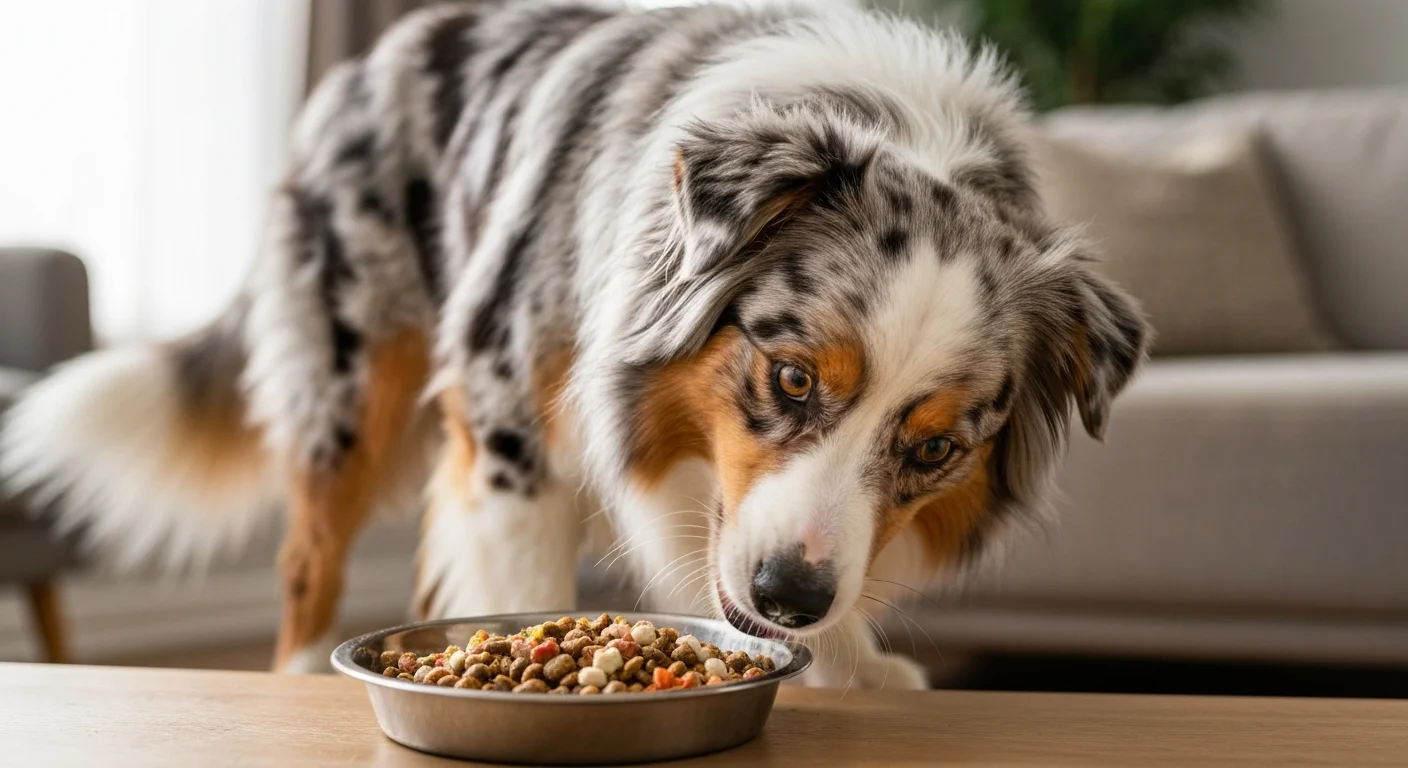
A practical day looks like this: a morning walk or yard session, a meal, a rest period, a shorter midday toilet break, a second activity period in the cooler part of the afternoon, a second meal, and a calm evening. Puppies, adolescents and seniors need different durations, but the shape of the day stays similar. Owners who work outside the home often split the routine with a household member or a dog walker, because a Golden Retriever left alone for ten hours will find its own occupation, usually in the garden.
Grooming fits into the same rhythm. A few minutes of brushing several times a week is easier to sustain than one long session at the weekend, and it catches mats and skin changes early. For owners who want a structured reference on living with the breed in Australian conditions, a guide such as Golden Retriever in Australia collects practical material on daily care, health checkpoints and acquisition decisions.
Feeding: how much and how often?
Feeding is where owners most often drift. A Golden Retriever is a food motivated breed, and free feeding makes body condition hard to judge. Measured meals, twice a day for adults, with the amount adjusted to body condition rather than to the bag's suggested range, is the more reliable approach.
Body condition scoring is the tool to use. Ribs should be easy to feel under a thin layer of fat, the waist visible from above, and the belly tucked from the side. Weighing the dog monthly and recording the number gives a trend that a single visual check cannot. Treats count toward the daily total, and in a training heavy household they can quietly add a large share of calories.
Puppies eat more frequently, typically three or four meals a day until they are several months old, then two. Large breed puppy diets are formulated with controlled calcium and energy levels, and switching to an adult formula too early or too late is a decision to discuss with a veterinarian rather than to guess. Fresh water must be available at all times, and more so in summer.
Foods that are unsafe for dogs, including chocolate, grapes, raisins, onions, garlic, macadamia nuts and xylitol, belong out of reach. Australian households often have these items in the kitchen, and a bin with a secure lid is a simple preventive measure.
Exercise: how much is enough, and when is it too much?
Exercise needs are moderate but real. Most adult Golden Retrievers do well with roughly one to two hours of activity a day, split across sessions, part of it walking and part of it off lead running, retrieving or swimming where that is safe and permitted. Swimming is low impact and suits the breed, but not every dog takes to water, and not every waterway is safe.
Growth plates in large breeds close late, so forced running and repetitive jumping on hard surfaces are usually avoided in young dogs. Free play on soft ground, short walks and swimming are gentler options. Once the dog is mature, higher intensity work can be added gradually.
Heat changes the plan. Australia's summers make midday exercise a risk, and flat faced or heavy coated dogs are not the only ones affected. Signs of overheating include heavy panting that does not settle, thick saliva, wobbling, vomiting and collapse. Moving exercise to early morning or evening, carrying water, and using shaded routes are basic precautions. Hot pavement is a separate hazard: if the back of a hand cannot stay on the surface for five seconds, it is too hot for pads.
Mental work counts as exercise. Retrieving games, scent work, food puzzles and short training sessions tire a dog in a way that a walk does not, and they are useful on days when weather or schedule rules out a long outing.
Grooming: what does the coat actually need?
The double coat needs regular attention rather than frequent bathing. Brushing several times a week removes loose undercoat, distributes skin oils and reduces shedding inside the home. During seasonal coat blow, daily brushing for a week or two is normal. A slicker brush, an undercoat rake and a metal comb cover most needs.
Bathing is usually needed only every four to eight weeks, or when the dog has rolled in something. Frequent bathing with harsh shampoos can strip the coat and irritate skin. Drying the coat thoroughly matters, particularly in humid conditions, because a damp undercoat against the skin is a favourable environment for hot spots.
Ears, nails and teeth are part of grooming. Floppy ears trap moisture, so they are checked weekly and cleaned when needed with a product intended for dogs. Nails are trimmed when they start to touch the ground while the dog stands. Teeth are brushed ideally several times a week, since periodontal disease is common in the breed and has consequences beyond the mouth.
Are breed standards useful reference points?
Yes, as reference points rather than as targets. A breed standard describes the typical adult Golden Retriever in terms of size, proportions, coat, head and movement. It gives an owner a way to place their dog on a scale: is the dog within the usual range, or is something outside it worth raising with a veterinarian?
Standards are also useful when reading health information. Hip and elbow scores, eye examinations and cardiac checks are recorded against breed specific schemes, and understanding what the numbers mean helps an owner follow a veterinarian's reasoning. The standard does not predict an individual dog's health, temperament or lifespan, and treating it as a guarantee leads to disappointment.
Where the standard is genuinely helpful is in conversations. A breeder, a veterinarian and an owner can use the same vocabulary about structure and condition, which makes decisions about weight, exercise and screening easier to discuss.
How do you choose a breeder responsibly?
Responsible acquisition starts with evidence. A breeder should be able to show health screening results for the parent dogs, including hip and elbow scoring, eye examination and, where relevant to the lines, cardiac and other breed specific tests. Ask what the results are, not whether testing was done.
Ask to see the mother with her litter, and ask about how the puppies are raised: what they are exposed to, how they are handled, and what happens if the owner can no longer keep the dog. A breeder who welcomes questions and offers a written agreement is easier to work with than one who does not.
Avoid decisions driven by appearance alone. Coat colour and markings do not indicate health or temperament, and breeding decisions based on colour rather than on health screening carry known risks in several breeds. The same principle applies to any trait presented as rare or special without documentation.
Rescue is a legitimate route. Breed specific rescue organisations in Australia rehome adult Golden Retrievers, and they can usually describe the dog's history, health and behaviour in more detail than a puppy buyer will ever have. For a household that wants an adult dog with a known temperament, that is often the more predictable choice.
Finally, budget for the whole life, not the purchase. Food, routine veterinary care, grooming tools, training, boarding and unexpected treatment all add up, and a large breed dog costs more across its life than a small one. Planning for that cost is part of acquiring responsibly.
The wider reading on this site that supports these decisions includes puppy health screening, life with a dog in Australia.
Dr. Patricia Wells
Canine Coat Genetics Specialist
Veterinary geneticist with over 25 years researching coat colour inheritance in domestic canids. Former research fellow at the Animal Health Trust and consultant to multiple breed health programmes across Europe and North America.
View all articles