
Whelping and Neonatal Care for Merle Litters: What to Expect and Prepare For
Whelping a merle litter is not fundamentally different from whelping any litter — the mechanics of birth are the same, the dam's needs are the same, and the immediate neonatal care required is the same. What is different is the layer of observational vigilance that responsible merle breeders must apply from the first moments of each puppy's life, because the whelping box is where the consequences of the genetics first become visible.
This guide covers preparation for whelping, what to observe during and immediately after birth, early indicators of merle-associated concerns, and the first days of neonatal care for merle puppies. It connects directly to the full health screening protocol described in our guide to merle puppy health screening from birth to eight weeks.
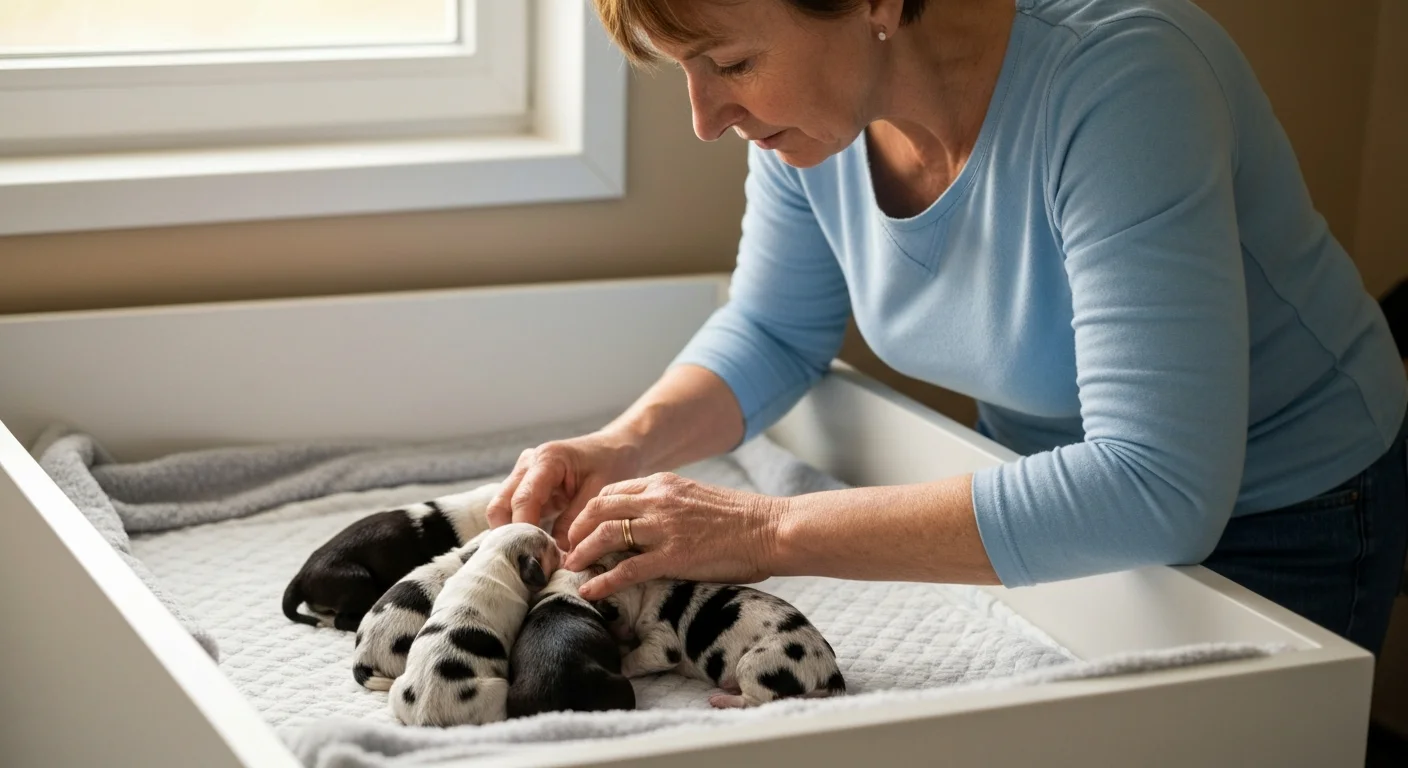
Pre-Whelping Preparation
Every whelping is preceded by preparation, and for merle litters, this preparation has additional components beyond the standard whelping kit and veterinary contact list. You should have documented, before whelping begins:
- Both parents' merle allele length test results and the expected litter genetic ratios
- Your veterinary ophthalmologist's contact details for early appointment scheduling
- Contact details for the nearest BAER testing facility, with availability confirmed
- A system for individual puppy identification from birth — whelping collars, nail polish marks, or similar
- A photographic record template for documenting each puppy's coat pattern and white distribution at birth
The expected genetic ratios from your pairing — derived from the parents' allele lengths — tell you what proportion of the litter you expect to be merle carriers. A significant deviation from expectation (for example, an unusually high number of very white puppies in a litter where neither parent was expected to carry double merle alleles) should prompt immediate reconsideration of the testing documentation for both parents. Allele instability can occasionally produce unexpected results, as documented in our guide to merle allele instability.
During Whelping: What to Record
As each puppy is born, the following should be recorded immediately before the puppy is passed to the dam:
- Time of birth and birth order
- Sex and approximate birth weight
- Coat colour description: base colour, presence and extent of merle pattern, white markings including location and coverage
- Any immediate concerns: obvious physical abnormalities, very low birth weight, breathing difficulties
Photographing each puppy individually within the first hour of life, against a consistent neutral background and in good light, creates a baseline record of coat pattern and white distribution. These photographs should be retained in the puppy's individual file throughout the pre-placement period.
White Distribution at Birth: The First Indicator
The distribution of white markings on a newborn merle puppy provides the first visual indicator of potential developmental concerns. White areas in the coat are produced by the absence of melanocytes — the pigment-producing cells that also contribute to the development of the inner ear and retinal pigment epithelium.
Puppies with very large white patches on the head — particularly white covering the ear flaps and surrounding the eye region — have a higher probability of merle-associated sensory development issues than puppies with standard-quantity white collar and blaze markings. This is not a certain predictor, but it is an indicator that elevates the priority of BAER testing and ophthalmological screening for the affected individual.
A puppy born largely or entirely white with small coloured patches (or no coloured patches) may be a double merle individual — particularly if the litter also contains classically patterned merle puppies. These puppies require the most urgent health screening and must not be placed without full BAER testing and specialist ophthalmological examination. The welfare implications are described in our guide to health issues in double merle dogs.
Neonatal Days One to Seven
The first week of a merle puppy's life is spent in the same helpless state as any neonate — eyes and ears sealed, entirely dependent on maternal care and warmth. The breeder's role is primarily to support the dam and monitor the litter for early warning signs.
Daily weight recording for each individually identified puppy during the first two weeks is the most important monitoring task. A puppy failing to gain weight consistently (expected gain of approximately 5–10% of birth weight per day in the first two weeks) is at risk regardless of coat colour. Early identification of weight-faltering puppies allows for intervention — supplementary feeding, veterinary assessment — before the puppy's condition deteriorates.
Observe the dam's behaviour toward individual puppies. Dams occasionally reject specific puppies, which may be an instinctive response to a puppy with profound disability who is not competing effectively for nursing positions. A persistently rejected puppy who is also very white should receive urgent veterinary assessment.
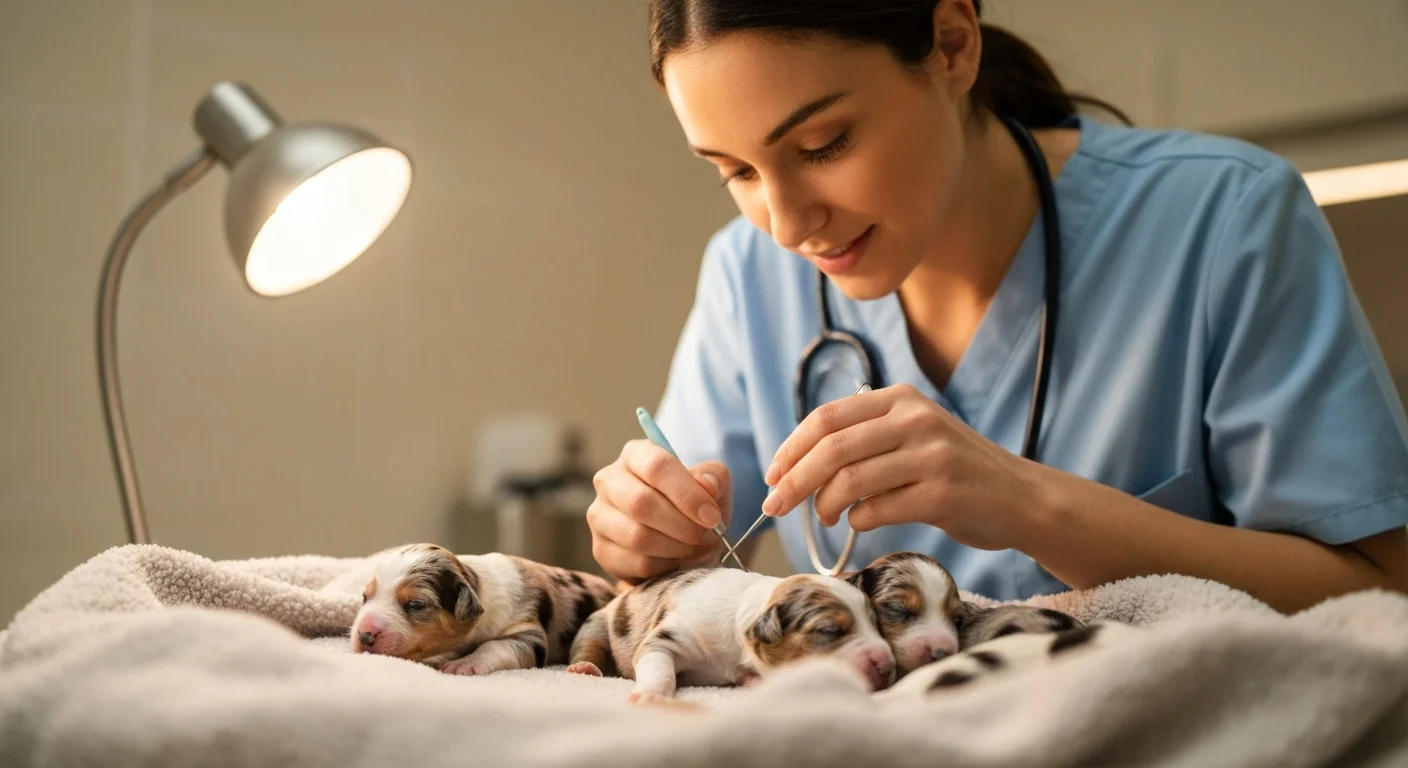
Days Seven to Fourteen: Early Physical Assessment
During the second week, experienced breeders begin a more hands-on physical assessment of each puppy. Before the eyes open, globe size can be estimated by gentle palpation of the eyelids. A veterinarian should be asked to perform this assessment at the two-week health check, but familiarity with normal globe feel helps the breeder identify anything unusual before the appointment.
At this stage, also assess:
- Cleft palate — run a clean finger along the roof of the mouth to confirm the palate is intact
- Overall muscle tone — merle-patterned puppies should have the same muscle tone as non-merle littermates at this age
- Suckling reflex strength — a weak suckling reflex may indicate neurological involvement requiring veterinary assessment
Preparing for the Veterinary Examination
The first formal veterinary examination at two weeks is more useful if the breeder arrives prepared. Bring your photographic record of each puppy's coat pattern, your weight record charts, and your notes from daily observation. A veterinarian who has context for what the breeder has observed can conduct a more targeted examination than one starting from scratch.
For any puppy you have flagged as potentially concerning — based on white distribution, weight trajectory, or behavioural observations — specifically request the assessments described in the full health screening protocol, including palpation for microphthalmia and a thorough cleft palate confirmation.
The care taken in the whelping box — from documentation to early health monitoring — sets the tone for the entire litter's welfare trajectory. Breeders who begin this process with rigour and attention will find that the subsequent health screening stages described on this site slot naturally into an already well-organised system. This is what responsible merle breeding looks like in practice.
Dr. Patricia Wells
Canine Coat Genetics Specialist
Veterinary geneticist with over 25 years researching coat colour inheritance in domestic canids. Former research fellow at the Animal Health Trust and consultant to multiple breed health programmes across Europe and North America.
View all articles