
Socialisation and Early Development of Merle Puppies: A Breeder's Responsibility
The socialisation window in dogs — the critical period between three and twelve weeks of age when puppies are most receptive to forming positive associations with people, animals, environments, and stimuli — is the breeder's primary opportunity to set every puppy up for a stable, confident adult life. For merle puppies, particularly those with any degree of sensory impairment, this window is even more significant.
This guide outlines an evidence-based early development and socialisation programme specifically designed for merle litters. It integrates general canine development principles with the specific sensory profiles that merle genetics can produce. This work is an essential part of responsible merle breeding that begins long before any genetic testing.
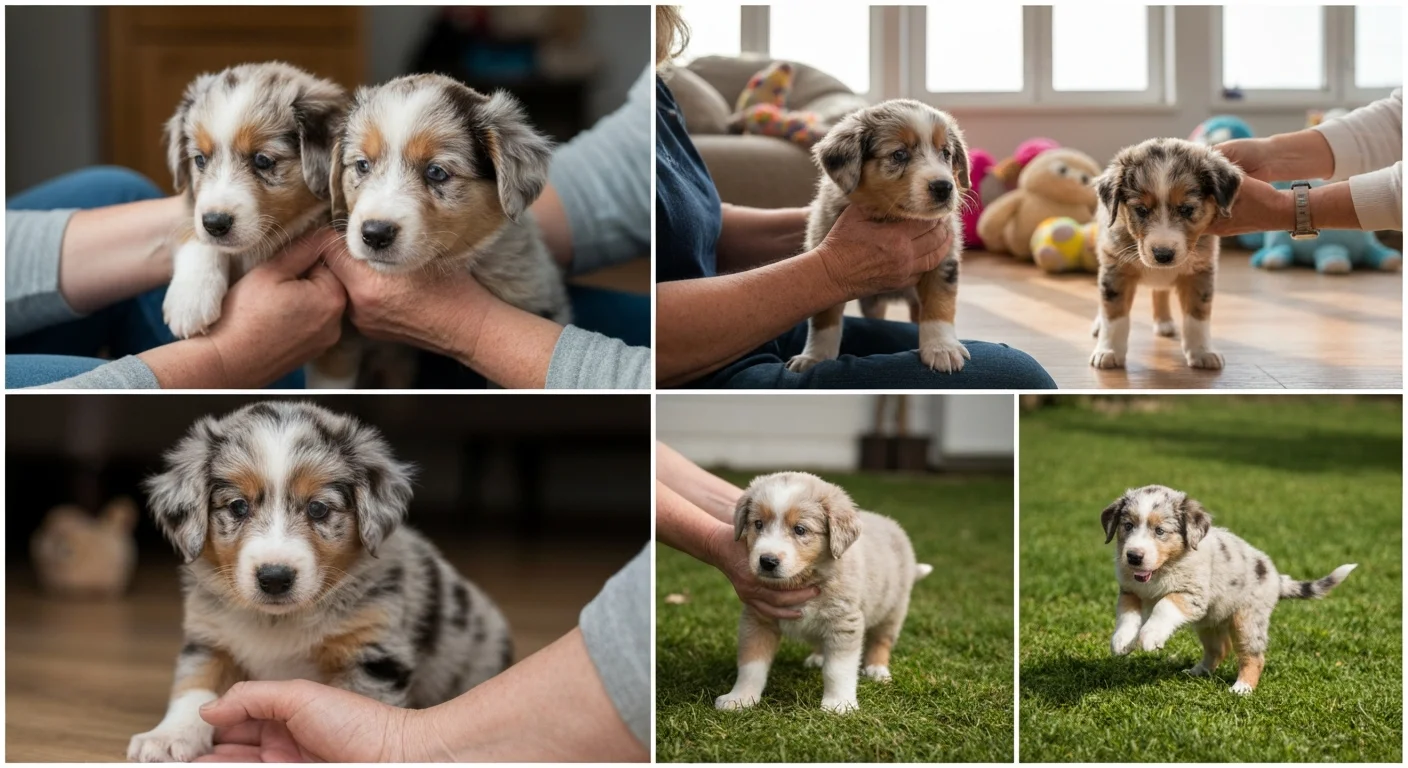
Understanding the Merle Puppy's Sensory Profile
Before designing a socialisation programme for a merle litter, the breeder must understand each puppy's individual sensory status. By six weeks of age, BAER testing will have confirmed each puppy's hearing status. Ophthalmological examinations will have identified any significant visual impairments. This information must directly shape the socialisation approach for each individual puppy.
A litter of merle puppies is rarely uniform. Some may have bilateral normal hearing and full visual acuity. Others may have unilateral hearing loss or minor ocular findings. A small number — particularly if the litter contains any double merle individuals — may have profound bilateral deafness or significant visual impairment. Each puppy needs a socialisation approach calibrated to its individual sensory profile. The range of possible health outcomes is described comprehensively in our guide to health issues in double merle dogs.
Early Neurological Stimulation: Weeks One to Three
Early neurological stimulation (ENS) protocols — gently handling each puppy in specific positions for brief periods during the first two weeks of life — are now standard practice in progressive breeding programmes. Research suggests that these gentle stressors during early development produce puppies with improved cardiovascular performance, stronger adrenal response, and enhanced problem-solving ability.
For merle litters, ENS is not just beneficial — it may be especially important. Puppies developing with sensory limitations will need to rely more heavily on their remaining senses and their confidence in novel situations. A puppy who has been gently handled from day one, who has experienced mild environmental variation from early in development, will have neurological reserves to draw on when navigating the world with sensory adaptations.
Once deafness is confirmed via BAER testing, adjust all handling protocols to avoid approaching deaf puppies from outside their visual field without warning. Start each interaction with a gentle touch to the shoulder or side. This simple adaptation prevents the startle response that can contribute to defensive behaviour in deaf dogs if not addressed from puppyhood.
Weeks Three to Five: Environmental Enrichment
From three weeks, puppies begin actively exploring their environment. The breeder's role at this stage is to introduce controlled novelty that builds confidence rather than overwhelming the litter. This includes:
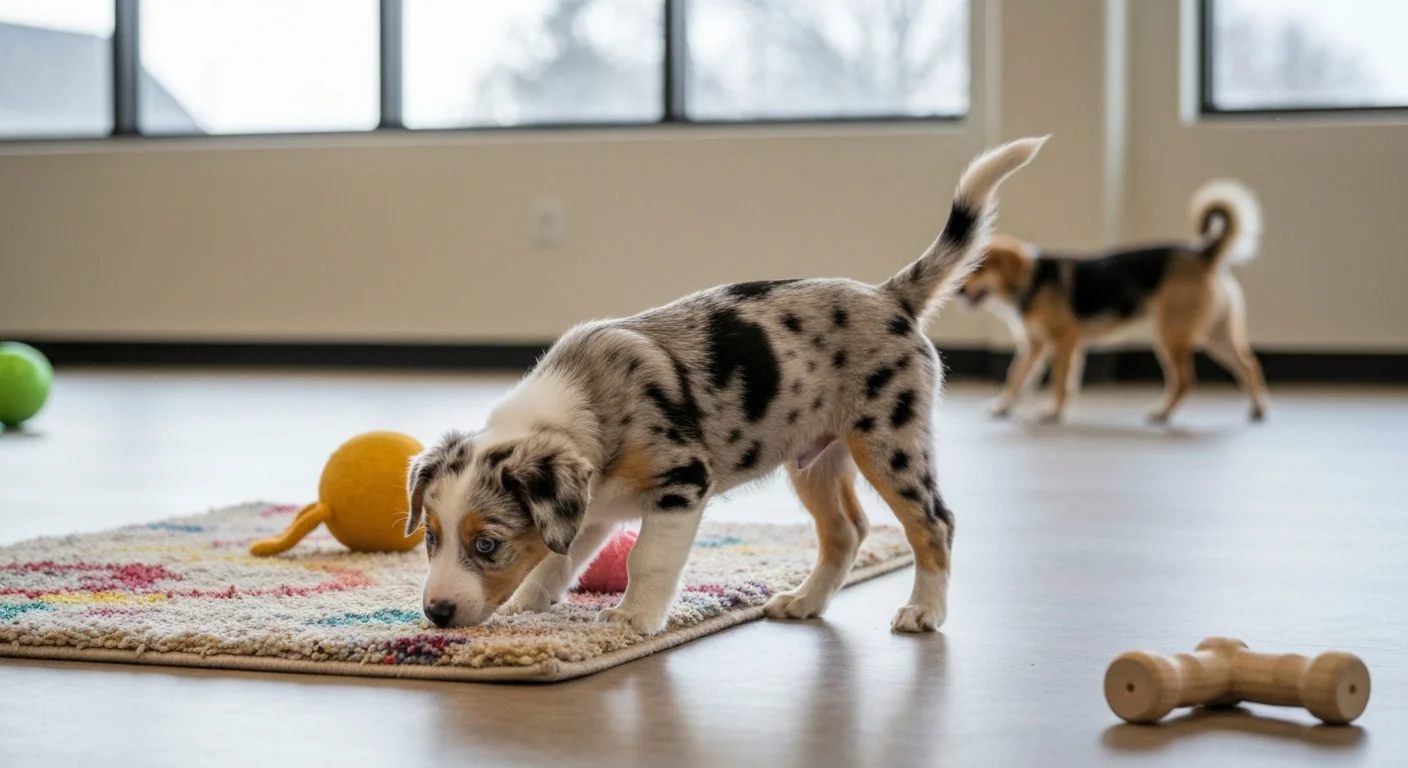
- Surface variation — different floor textures under the pups' feet, including carpet, vinyl, grass, and non-slip mats
- Sound introduction for hearing puppies — recorded household sounds, gentle music, voices at different volumes
- Visual enrichment — objects of different sizes, shapes, and gentle movement
- Human contact — multiple different people interacting gently with puppies daily
- Mild height variation — low ramps or steps to build proprioceptive confidence
For puppies confirmed deaf in both ears, sound introduction is replaced by increased emphasis on visual and tactile enrichment. Vibration experiences — a gently running washing machine nearby, low-frequency music through a surface — help deaf puppies integrate sensory information from channels they will rely on throughout their lives.
Weeks Five to Eight: Social Confidence Building
The final three weeks before placement are critical for building the social confidence that will define how each puppy relates to the world as an adult. The socialisation programme at this stage should include:
- Regular, positive interactions with adults and children of different ages and appearances
- Exposure to other animals — other dogs of different sizes, cats if possible
- Short car journeys and exposure to different outdoor environments within the vaccination safety window
- Introduction to crates, play pens, and separation from littermates for increasing periods
- Basic responses to feeding signals and early marker training
The aim is not to expose puppies to every possible stimulus before they leave — this is impossible in eight weeks — but to build a generalised confidence that allows them to approach novel situations with curiosity rather than fear. A puppy who has had rich, positive early experiences will generalise this positivity to new situations as they arise.
Breed-Specific Considerations for Merle Breeds
Most breeds that carry the merle gene are herding breeds: Australian Shepherds, Border Collies, Shetland Sheepdogs, Collies. These breeds have been selected for heightened environmental sensitivity, quick reactions, and close human bonding. This sensory sensitivity makes early socialisation even more important — an under-socialised herding breed puppy with normal senses can develop fear and reactivity issues. Add any sensory impairment to this equation, and inadequate socialisation can produce very serious behavioural problems.
Buyers of merle puppies from herding breeds must be prepared to continue the socialisation programme started by the breeder. Breed-specific information about the merle gene in herding breeds is covered in our guide to merle genetics in the Australian Shepherd.
Preparing Buyers for Ongoing Development
The breeder's socialisation work does not substitute for the buyer's commitment to continue it. Every merle puppy buyer should receive a written socialisation plan along with their puppy, including:
- A record of what the puppy has already been exposed to
- Specific guidance on continuing socialisation for a puppy with the puppy's individual sensory profile
- Recommendations for puppy classes or trainers with experience handling hearing-impaired or visually impaired dogs where relevant
- Contact information for support if the buyer encounters difficulties
The eight weeks a merle puppy spends in the breeder's care are an investment with lifelong returns. A well-socialised merle puppy — regardless of its sensory profile — will have the foundations for a rich, fulfilling life. A poorly socialised puppy will struggle unnecessarily. The time and care invested by the breeder during this period is one of the most significant contributions they can make to each puppy's welfare.
Dr. Patricia Wells
Canine Coat Genetics Specialist
Veterinary geneticist with over 25 years researching coat colour inheritance in domestic canids. Former research fellow at the Animal Health Trust and consultant to multiple breed health programmes across Europe and North America.
View all articles