
Merle Puppy Health Screening Protocol: From Birth to Eight Weeks
Every merle puppy born into a responsible breeding programme deserves a thorough health screening before it leaves for its new home. The merle gene carries well-documented risks to eye and ear development, and these risks require active monitoring from the first days of life. A protocol-driven approach — not left to chance or to a single veterinary appointment — is the standard all responsible merle breeders should meet.
This guide sets out a week-by-week screening framework for merle litters, from whelping through to placement. It covers what to look for, when to involve a veterinary specialist, and how to document findings so that puppy buyers receive accurate health information. Understanding the full scope of health issues associated with the merle pattern is a prerequisite for implementing this protocol effectively.
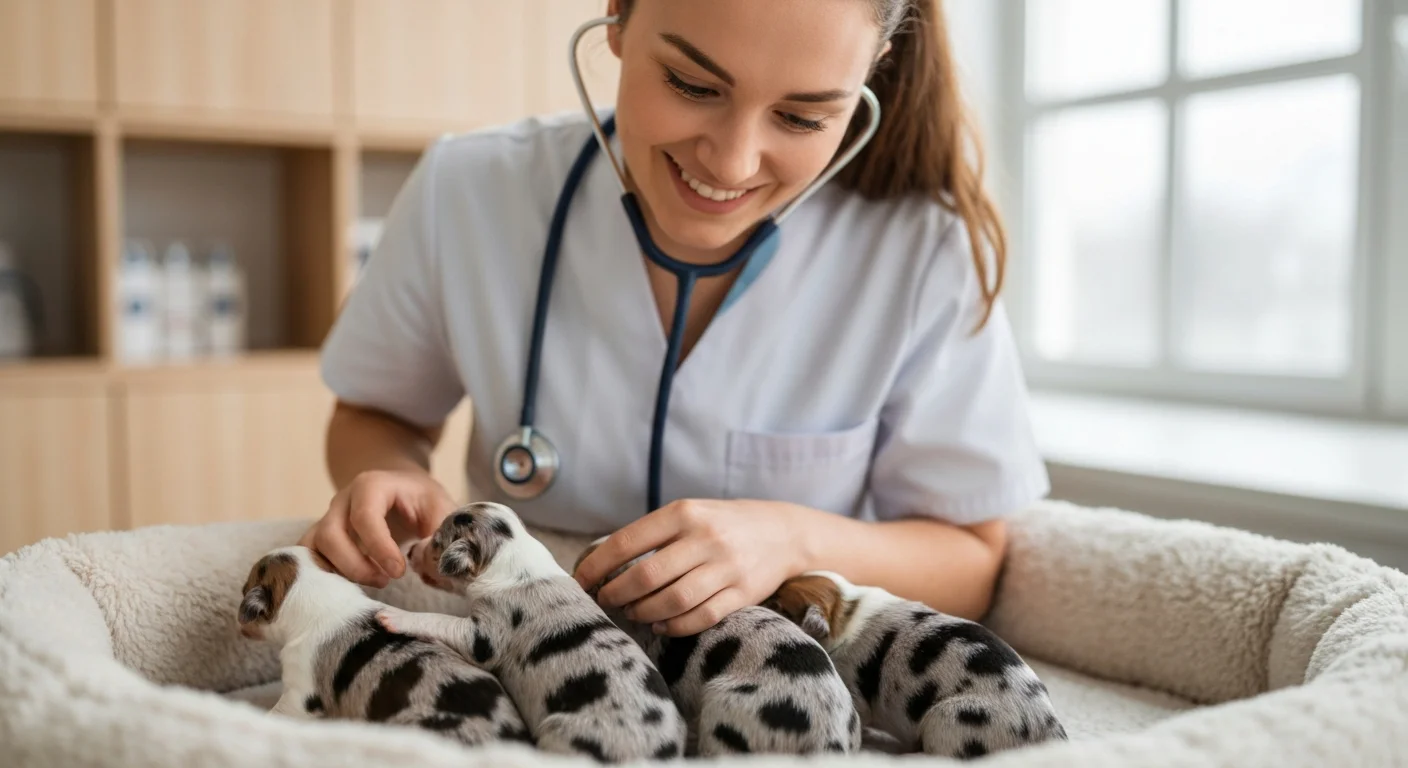
Day One: The Whelping Assessment
As each puppy is born, a basic physical assessment should be completed before the puppy is placed with the dam for first feeding. This is not a full examination — a thorough examination requires a veterinarian — but the breeder should note and photograph the following for every puppy:
- Coat colour and pattern, including the extent and distribution of merle patterning or white markings
- The presence or size of any white areas on the head, particularly around the eyes and ears
- Any visible eye abnormalities, though the eyes will be closed at birth in most breeds
- Birth weight, which should be recorded and tracked daily for the first two weeks
The distribution of white on the head at birth is an early indicator of potential sensory development issues. Puppies with very large white head patches — a characteristic associated with excessive depigmentation in double merle dogs — warrant particularly close monitoring. This is explained in detail in our guide to double merle puppies, which covers the developmental mechanisms involved.
Week Two: First Veterinary Check
Between 10 and 14 days of age, all puppies should receive a veterinary examination. This should include a full physical assessment, with particular attention to:
- Microphthalmia — abnormally small eyeballs, which can be detected by palpation even before the eyes open
- Overall body condition, muscle tone, and weight gain trajectory
- Heart and lung auscultation
- Cleft palate check, which should have been done at birth but must be confirmed
Microphthalmia may not be obvious to a non-specialist observer. Always request specific palpation assessment of globe size from your veterinarian during the two-week check, particularly for any puppy showing excessive head white or other features consistent with homozygous merle phenotype. Early identification allows you to provide accurate information to puppy buyers and adjust placement accordingly.
Week Three to Four: Eyes Open Assessment
Once the eyes open, typically between 10 and 16 days of age, a preliminary visual assessment becomes possible. By three to four weeks, eye development is sufficiently advanced to observe some abnormalities without specialist equipment. Look for:
- Cloudiness or opacity in the cornea or lens
- Asymmetry in eye size between the two eyes, or between puppies in the litter
- Iris colobomas — irregular pupil shape caused by incomplete iris development
- Pupils that do not respond normally to light changes
Photographs taken under consistent lighting conditions at this stage create a useful baseline for comparison during later examinations. These photographs should be retained in the puppy's documentation file and shared with buyers along with veterinary reports. Complete documentation practices for merle breeding programmes are covered in our guide to merle breeding record keeping and genetic databases.
Week Five to Six: BAER Testing Eligibility
Brainstem Auditory Evoked Response (BAER) testing can be performed from approximately five weeks of age, though six weeks is a more practical minimum in terms of puppy cooperation and reliability. BAER testing is the only reliable method for assessing hearing status in individual ears and identifying unilateral deafness — a condition that is undetectable through behavioural observation alone.
All merle puppies from a litter should receive BAER testing before placement. This applies even to puppies whose parents were confirmed non-merle, if the litter contains any merle individuals — the testing requirement follows the litter, not just the individual. The rationale for this and detailed BAER testing protocols are explained in our comprehensive guide to merle and deafness.
Testing should be performed by a veterinarian or audiologist trained in BAER testing. Referral to a specialist neurology centre may be necessary in areas where local veterinary practices do not offer the service. Results must be provided to puppy buyers in full, with a clear explanation of what bilateral, unilateral, and normal results mean for a pet dog's life.
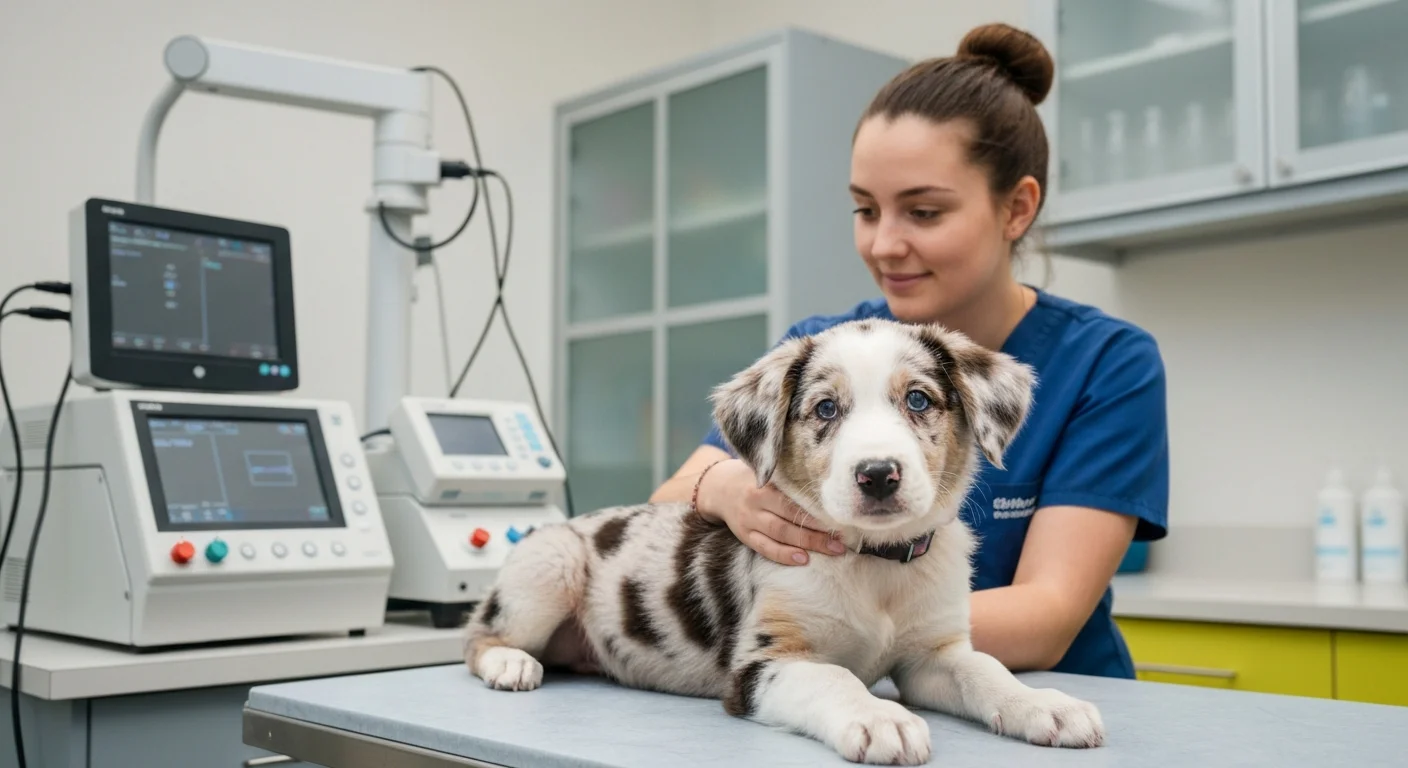
Week Six to Seven: Ophthalmological Examination
A specialist ophthalmological examination should be scheduled for six to seven weeks of age for all merle puppies. This should be performed by a veterinary ophthalmologist, not a general practice veterinarian. The examination should cover:
- Slit-lamp biomicroscopy for lens and anterior segment assessment
- Indirect ophthalmoscopy for retinal assessment
- Tonometry if indicated
- Assessment of globe size, iris development, and tapetal colouration
Veterinary ophthalmologists in the UK can be located through the British Veterinary Association eye scheme. In North America, the Orthopedic Foundation for Animals maintains a registry of eye examination results that responsible breeders should use to document their findings officially.
Week Eight: Pre-Placement Health Certificate
No merle puppy should leave for its new home without a pre-placement health examination by a licensed veterinarian within 72 hours of departure. This examination should produce a written health certificate confirming that the puppy is free from visible signs of illness, is appropriately vaccinated for age, and has been wormed to schedule.
Alongside the health certificate, every merle puppy's placement pack should include the results of BAER testing and the ophthalmological report. Buyers who receive this documentation understand what they are acquiring and are equipped to make informed decisions about veterinary follow-up.
A merle breeder who provides thorough health documentation at placement demonstrates professionalism and genuine care for the puppies they produce. This documentation also protects the breeder — it establishes a clear baseline of health status at the time of sale that is invaluable if any queries arise later.
The screening protocol described here represents a minimum standard. Some breeders go further, scheduling follow-up examinations at 12 weeks and referring buyers to specialists for annual eye checks throughout the dog's life. This level of ongoing engagement is the hallmark of a breeder who truly cares about the animals they produce. If you are buying a merle puppy, our puppy buyer's guide explains exactly what documentation you should expect and how to interpret the results.
Dr. Patricia Wells
Canine Coat Genetics Specialist
Veterinary geneticist with over 25 years researching coat colour inheritance in domestic canids. Former research fellow at the Animal Health Trust and consultant to multiple breed health programmes across Europe and North America.
View all articles