
Merle in Non-Traditional Breeds: The Growing Crisis
In 2022, a woman brought me a French Bulldog puppy she had paid four thousand pounds for. He was advertised as a "lilac merle tri" - a colour combination that does not exist in the breed's natural gene pool. At eight months old, he was already showing signs of bilateral hearing loss. When I tested him, the results confirmed what I had suspected: he carried two copies of the merle allele. He was a double merle, produced by a breeder who had no understanding of the gene they were playing with, in a breed where that gene had no business being.
The introduction of merle into breeds where it has no historical presence is one of the most concerning trends in modern dog breeding. It is driven entirely by market demand for "rare" colours and has created a welfare crisis that is growing year on year.
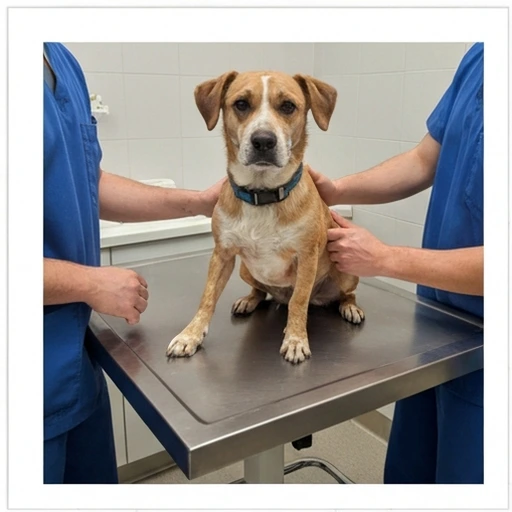
How Merle Enters New Breeds
The merle gene does not spontaneously appear. It must be introduced through crossbreeding with a breed that already carries it. In most cases, a dog from a merle-carrying breed - typically an Australian Shepherd, Dachshund, or Chihuahua - is crossed with the target breed. The resulting offspring are then backcrossed over several generations to the target breed until they resemble purebreds visually, even though they carry foreign genetic material.
This process is sometimes called "breeding up" and is used legitimately in some contexts, such as introducing health-tested stock into a gene pool. But when the purpose is purely cosmetic - creating a merle French Bulldog or a merle Poodle for higher sale prices - the practice raises serious ethical questions that I have explored in my wider work on the ethics of merle breeding decisions.
Merle puppies in non-traditional breeds regularly sell for two to five times the price of standard-coloured puppies. This financial incentive drives breeders to produce merle litters without adequate genetic knowledge, testing, or regard for welfare. When a "rare" colour commands a premium, every buyer who pays it is funding the next generation of affected puppies.
Breeds Currently Affected
The list of breeds into which merle has been introduced grows every year. As of my most recent survey of online breeding advertisements and kennel club incident reports, the following breeds now have documented merle populations:
Non-traditional merle breeds with documented welfare concerns:
- French Bulldog - The most commonly affected breed. Merle was likely introduced through Chihuahua crosses. Double merle cases are now reported weekly to breed rescue organisations
- English Bulldog - Following the French Bulldog trend. Already a breed with significant health burdens; merle adds another layer of risk
- Poodle (all sizes) - Merle introduced through unknown crosses. Some registries have begun accepting merle Poodles, complicating the issue
- Cocker Spaniel - Sporadic merle introductions documented in both American and English varieties
- Pomeranian - Merle Pomeranians have become increasingly popular on social media platforms
- Pitbull-type breeds - Merle introduced through multiple pathways, often in unregistered breeding programmes
- Yorkshire Terrier - "Merle Yorkies" marketed as rare designer dogs
Why Non-Traditional Merle Is More Dangerous
One might ask why merle in a French Bulldog is more dangerous than merle in an Australian Shepherd. The gene itself behaves identically regardless of breed. The danger lies not in the gene but in the context surrounding its use.
Lack of Breed-Specific Knowledge
In breeds where merle has existed for generations - Australian Shepherds, Shelties, Collies - there is an established body of knowledge within the breeding community. Experienced breeders understand the risks, know the testing protocols, and have developed safe breeding practices over decades. Breed clubs provide education and sometimes mandate testing.
In breeds where merle has been recently introduced, this institutional knowledge does not exist. The breeders producing merle French Bulldogs are often newcomers to breeding altogether, drawn by the profit potential rather than a commitment to breed improvement. They may not know what a cryptic merle is. They may not understand allele length variation. They are unlikely to know that sable and recessive red coats can completely hide the merle pattern, creating invisible carriers. They may not even know that breeding two merle dogs together is dangerous.
No Registry Oversight
Major kennel clubs - the Kennel Club in the UK, the AKC in the United States, the FCI internationally - do not recognise merle in most of these breeds. This means merle dogs in these breeds cannot be registered through standard channels. Instead, they are registered through alternative registries with minimal or no health requirements, or they are sold without registration papers at all.
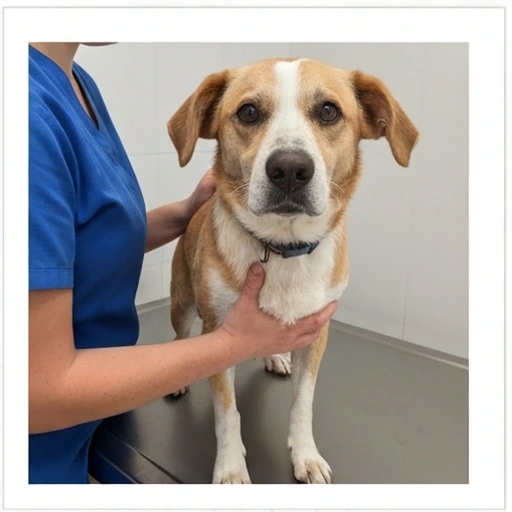
The absence of registry oversight means there is no mechanism for tracking pedigrees, no requirement for health testing, and no way to identify carriers or trace affected puppies back to their breeders. The gene moves through these populations completely unmonitored. In traditional merle breeds, responsible breeders maintain detailed genetic databases that track allele lengths across generations; in non-traditional breeds, such record keeping is virtually non-existent.
Compounding Health Issues
Many of the breeds into which merle is being introduced already carry significant health burdens. French Bulldogs suffer from brachycephalic obstructive airway syndrome, spinal abnormalities, and skin conditions. English Bulldogs have similar issues compounded by joint problems and cardiac concerns. Adding the merle gene - with its associated risks of ocular and auditory abnormalities - to breeds that are already compromised is, in my professional opinion, indefensible.
I have examined merle French Bulldogs with the full spectrum of double merle health issues layered on top of the breed's existing problems. A dog that already struggles to breathe should not also be blind. A breed prone to spinal disease should not have the additional burden of neurological complications from pigment cell disruption.
The Social Media Amplifier
The explosion of merle in non-traditional breeds coincides precisely with the rise of social media as a marketing platform for puppies. Instagram accounts showcasing "exotic" coloured dogs accumulate hundreds of thousands of followers. TikTok videos of merle French Bulldogs generate millions of views. Each viral post creates demand that breeders rush to fill.
The algorithms reward novelty. A standard fawn French Bulldog does not generate engagement. A blue merle tri with striking blue eyes does. The financial logic is straightforward: more unusual colours mean more followers, more followers mean more enquiries, more enquiries mean higher prices. The dogs themselves are reduced to content - their welfare secondary to their visual impact on a screen.
I have spoken to breeders who told me openly that they began producing merle dogs specifically because of social media demand. Several admitted they had not tested their breeding dogs before producing their first litters. One told me he had "learned about the double merle thing" only after producing affected puppies in his third litter. By then, he had sold dozens of merle puppies to buyers equally uninformed.
The Genetic Integrity Question
Beyond the immediate welfare concerns, the introduction of merle into non-traditional breeds raises questions about genetic integrity that the broader breeding community must address. When merle is introduced through crossbreeding, it does not arrive alone. The donor breed contributes its entire genome, not just the merle allele. This means that merle French Bulldogs may carry genes from Australian Shepherds, Chihuahuas, or whatever breed provided the merle gene - genes that could affect temperament, structure, health predispositions, and other characteristics.
Research into herding breed genetics has shown how deeply interconnected coat colour genes can be with other functional traits. Introducing merle into a non-herding breed may carry along linked genes with unpredictable effects on the receiving breed's phenotype and health profile.
- Major breed clubs have issued statements opposing merle in their breeds
- The Kennel Club (UK) will not register merle puppies in breeds where the colour is not historically present
- Some European countries have begun legislative action against breeding for extreme colours
- Breed-specific rescue organisations are tracking and reporting merle-related health issues
- Veterinary organisations are publishing guidance on the welfare implications
Case Studies from My Practice
In the past three years alone, I have personally evaluated seventeen merle dogs from non-traditional breeds. The cases are remarkably consistent in their patterns:
A merle English Bulldog purchased for three thousand five hundred pounds developed progressive vision loss by age two. Testing revealed he carried an atypical merle allele that had been missed by the breeder's basic colour test. His eyes showed bilateral iris coloboma - holes in the iris that allowed uncontrolled light entry, causing pain in bright conditions. His breeder had advertised him as "health tested," referring only to a basic DNA panel that did not include merle allele length analysis.
Twin merle Pomeranian puppies from the same litter presented with dramatically different phenotypes - one appeared classically merle, the other was almost entirely white. The white puppy was profoundly deaf. The breeder had told the buyer that the white colouration was "just how that line expressed." In fact, the white puppy was a double merle. The instability of merle alleles meant that the two puppies had inherited different length alleles from their parents, resulting in one being Mm and the other MM.
A merle Cocker Spaniel was surrendered to rescue at fourteen months because the owner could not cope with his "behavioural problems" - spinning, wall-staring, apparent confusion. Veterinary examination revealed he had severe microphthalmia in one eye and significant vision impairment in the other. His "behavioural problems" were a blind dog trying to navigate a world he could barely see.
What Needs to Change
The proliferation of merle in non-traditional breeds represents a market failure. The incentives are aligned entirely against welfare: breeders profit from producing these dogs, buyers pay premiums for them, and social media amplifies demand. Without intervention, the problem will continue to grow.
I advocate for a multi-pronged approach:
- Legislative action - Governments should follow the lead of countries like the Netherlands, which has begun restricting breeding for extreme physical characteristics. Merle in non-traditional breeds should be included in these frameworks
- Registry enforcement - Kennel clubs should refuse to register merle dogs in breeds where the colour has no historical basis, and should actively investigate breeders who misrepresent their dogs' heritage
- Mandatory testing - Any breeding involving merle dogs, in any breed, should require documented merle allele length testing from an accredited laboratory
- Platform responsibility - Social media companies and online marketplaces should restrict the advertising of dogs bred from non-standard colour crosses
- Buyer education - The guidance we provide to puppy buyers must specifically address the risks of purchasing merle dogs from non-traditional breeds
A Personal Plea
I have worked with merle genetics for over three decades. I have seen the beauty of the pattern in breeds where it belongs, produced by knowledgeable breeders who test, plan, and take responsibility for every puppy they create. I have also seen the suffering it causes when it is treated as nothing more than a marketing tool.
If you are considering purchasing a merle dog from a non-traditional breed, I ask you to think carefully about what your money is supporting. Every sale funds the next litter. Every "rare colour" premium incentivises another breeder to cross breeds without understanding the consequences. The puppy you buy may be healthy, or it may develop problems that will break your heart and empty your bank account. Either way, your purchase tells the market that there is demand for more.
The merle gene is not a toy. It is not a fashion statement. It is a powerful genetic variant that demands knowledge, testing, and respect. In breeds where it has no historical presence, it is very often none of these things. Until that changes, every merle puppy born in a non-traditional breed represents a gamble taken with a living creature's welfare - and that is something no responsible person should be willing to fund.
Dr. Patricia Wells
Canine Coat Genetics Specialist
Veterinary geneticist with over 25 years researching coat colour inheritance in domestic canids. Former research fellow at the Animal Health Trust and consultant to multiple breed health programmes across Europe and North America.
View all articles