
Merle Eye Anomaly and Vision Screening Protocols
In 2017, a breeder sent me photographs of a litter of Australian Shepherd puppies. Five were merles, all from a properly tested merle-to-non-merle pairing. No double merle risk whatsoever. Yet two of those merle puppies had noticeable iris irregularities, and one had a subtle but detectable coloboma that a veterinary ophthalmologist later confirmed. The breeder was stunned: she had done everything right, and still her puppies had eye anomalies.
This is the aspect of merle genetics that too many breeders overlook. While the catastrophic blindness associated with double merle dogs rightly dominates the conversation, single merle dogs - heterozygous carriers with one copy of the gene - can also present with ocular variations that deserve attention, screening, and honest disclosure to puppy buyers.
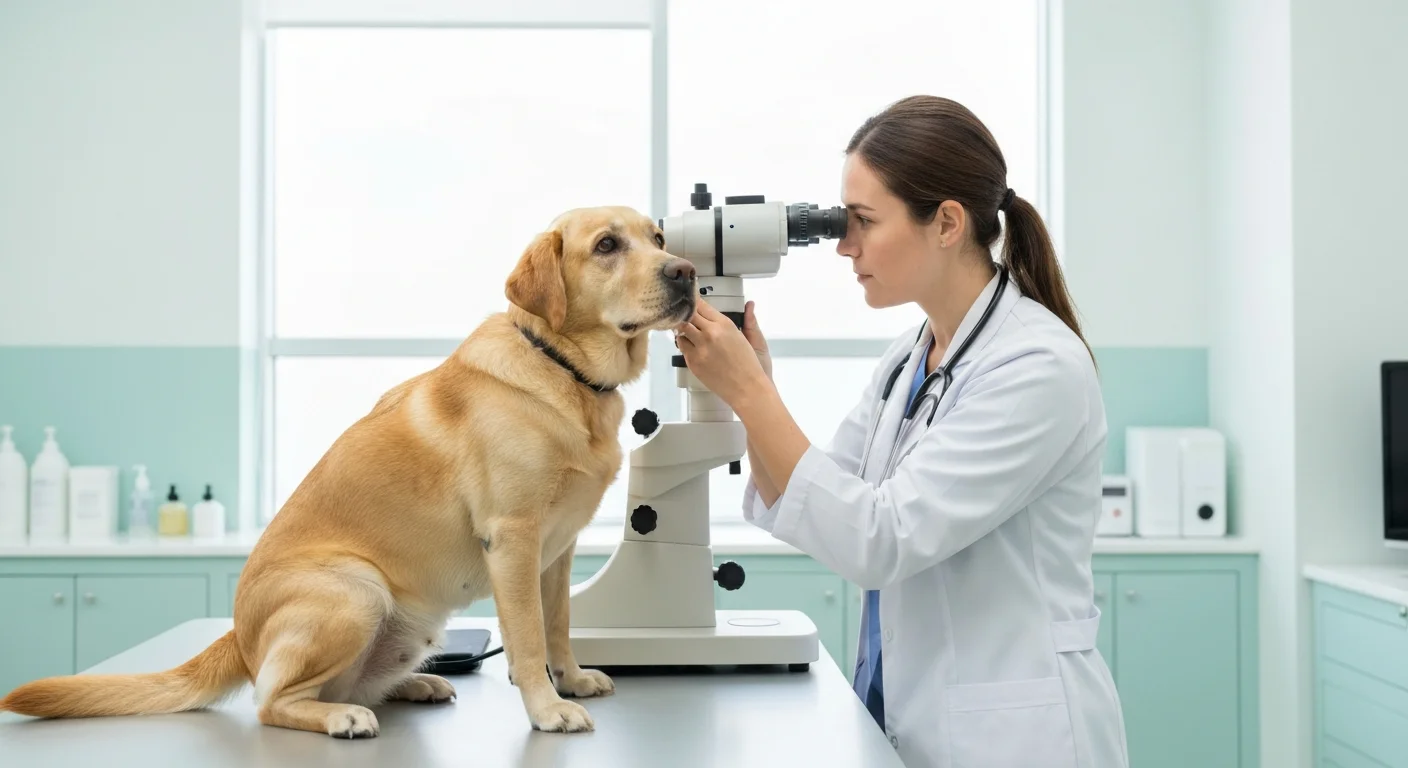
Why Merle Affects Eyes Even in Heterozygotes
The PMEL17 gene disrupted by the merle SINE insertion is expressed in melanocytes throughout the body, including the pigmented structures of the eye. The iris, the choroid, and the retinal pigment epithelium all require properly functioning melanocytes for normal development.
In a heterozygous merle (M/m), the random nature of merle dilution means that melanocyte function is disrupted in a mosaic pattern. In the coat, this creates the characteristic patches of diluted and full colour. In the eye, the same mosaicism can produce a range of effects from harmless heterochromia to structurally significant anomalies.
Ocular findings in single merle dogs:
- Heterochromia iridis - Different-coloured eyes or segments of different colour within one iris
- Iris hypoplasia - Thinning of iris tissue, sometimes with transillumination defects
- Iris coloboma - Gaps in the iris, usually at the six o'clock position
- Choroidal hypoplasia - Reduced pigmentation of the choroid layer
- Microcornea - Slightly smaller than normal corneal diameter
- Eccentric or dyscoric pupils - Irregularly shaped pupils
It is important to stress that the majority of single merle dogs have perfectly functional vision. Most of the findings listed above, when they occur in heterozygotes, are mild and do not impair the dog's quality of life. However, they are clinically relevant for breeding programmes, and they can occasionally progress or combine to create functionally significant visual impairment.
The Spectrum from Cosmetic to Clinical
I categorise merle-related eye findings in heterozygous dogs across three tiers, based on decades of observation and collaboration with veterinary ophthalmologists:
Tier 1: Cosmetic Variations
Blue eyes or wall eyes in merle dogs are not abnormalities. They result from reduced melanin in the iris stroma and are a predictable consequence of the merle gene acting on eye pigmentation. These dogs see perfectly well, and no breeding restriction is warranted on this basis alone. The same applies to small segments of blue within an otherwise brown iris - so-called sectoral heterochromia.
Tier 2: Subclinical Anomalies
Small iris colobomas, mild iris hypoplasia, and minor pupil irregularities fall into this category. The dog's vision is typically unaffected or minimally affected, but these findings indicate a degree of developmental disruption that may be relevant for breeding decisions. Dogs with subclinical anomalies should still be bred only to confirmed non-merles, and their offspring should be carefully screened.
Tier 3: Clinically Significant Findings
Large colobomas, retinal anomalies, cataracts, or microphthalmia in a single merle dog are rare but documented. These dogs may have impaired vision and generally should not be bred, even to non-merles. Their presence in a heterozygous dog suggests a particularly disruptive allele or unfavourable interaction with other genes affecting eye development. Understanding the complex interactions between merle and other genetic loci helps explain why some merles are more severely affected than others.
While blue eyes alone are cosmetic, they should prompt a thorough ophthalmic examination. In some cases, what appears to be simple heterochromia actually accompanies subtle structural anomalies that are only detectable through proper screening. Never assume blue eyes equal healthy eyes without professional confirmation.
Screening Protocols for Merle Breeding Stock
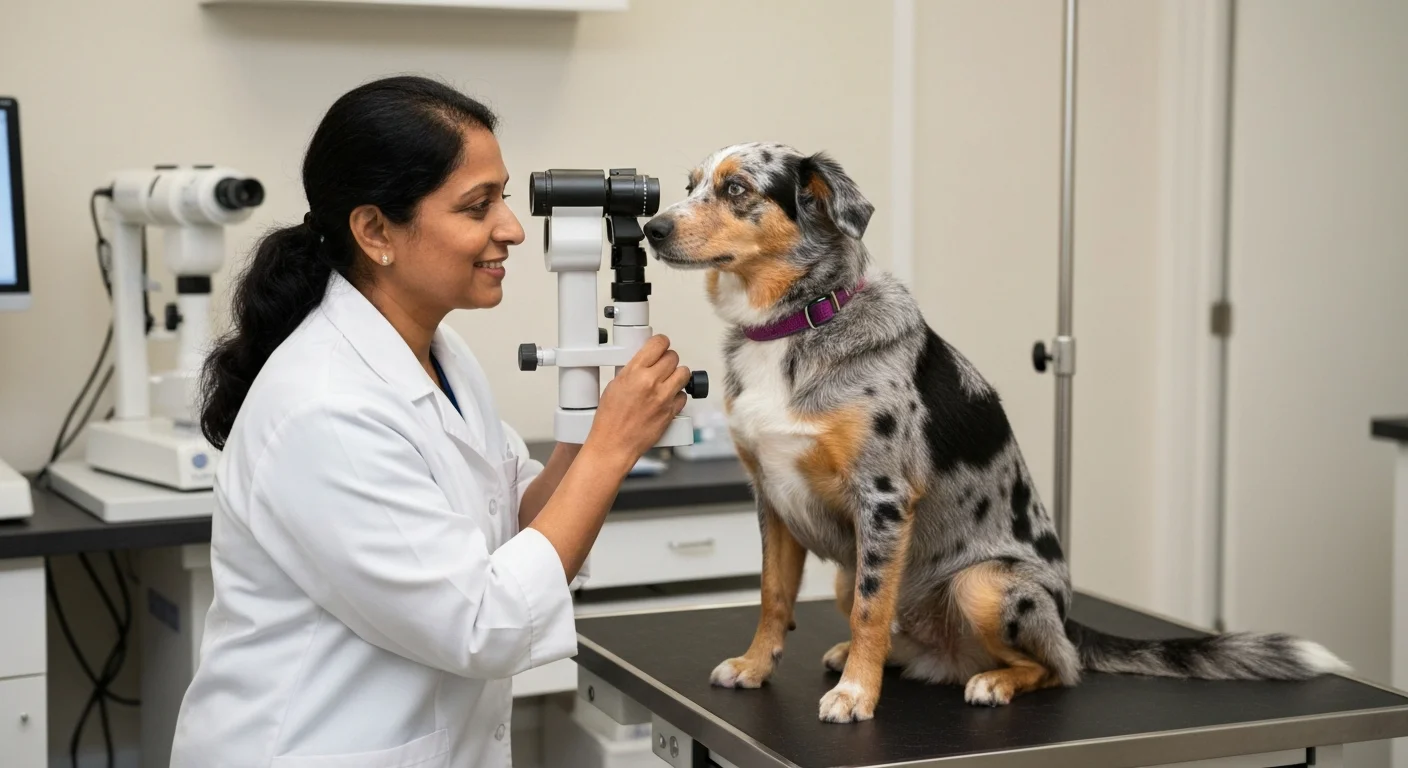
Every merle dog in a breeding programme should undergo a comprehensive ophthalmic examination before producing a litter. This is not optional, and it is not replaceable by a general veterinary check. The standard of care requires evaluation by a board-certified veterinary ophthalmologist or, at minimum, a veterinarian trained in the examination protocol recognised by schemes such as the BVA/KC/ISDS Eye Scheme in the UK or the OFA Eye Certification Registry in North America.
What the Examination Includes
- Direct and indirect ophthalmoscopy - Assessment of all internal eye structures
- Slit lamp biomicroscopy - Detailed examination of the cornea, iris, and lens
- Pupil reflexes and response testing - Functional assessment of both eyes
- Fundoscopy - Examination of the retina and optic nerve
- Gonioscopy - Assessment of drainage angles (breed-specific recommendation)
- Schirmer tear testing - If indicated by other findings
This examination should be performed annually on breeding animals, as some conditions develop or progress over time. The results should form part of the comprehensive breeding records maintained for every dog in the programme.
Interpreting Results for Breeding Decisions
The eye examination report will categorise findings using standardised terminology. For merle breeders, the key questions are:
- Are the findings consistent with normal merle variation, or do they indicate excess developmental disruption?
- Is there any progressive component that may worsen with age?
- Are the findings symmetric or asymmetric? (Asymmetric findings may indicate mosaic effects of the merle gene.)
- Would breeding this dog risk transmitting a predisposition to more severe eye anomalies?
These questions cannot be answered by the breeder alone. A qualified ophthalmologist's interpretation is essential. As with all aspects of responsible merle breeding, the goal is to make decisions based on professional assessment rather than personal opinion or wishful thinking.
- First screening at 6-8 weeks of age (pre-sale examination for all puppies)
- Repeat screening at 12 months before entering the breeding programme
- Annual re-examination for all active breeding animals
- Post-breeding examination if any offspring present with eye anomalies
- BAER testing alongside eye screening for comprehensive sensory assessment
The Disclosure Obligation
Breeders have an ethical and, increasingly, a legal obligation to disclose eye examination findings to puppy buyers. Even mild findings that do not affect the puppy's quality of life should be communicated. A buyer who discovers unreported eye anomalies through their own veterinarian will - rightly - lose trust in the breeder who failed to mention them.
Understanding the broader principles of coat colour inheritance helps explain to buyers why merle affects eyes, why screening matters, and why the findings in their puppy's eye examination report are not cause for alarm but rather evidence of thorough care.
Transparency about eye screening results also benefits the breed as a whole. When breeders share their data openly, patterns emerge across bloodlines that help the community identify dogs whose merle alleles produce more or fewer ocular effects. This population-level knowledge is invaluable for making breeding decisions that progressively reduce the incidence of significant eye anomalies in merle dogs.
Beyond the Eyes: A Holistic Approach
Eye screening should never be the only health assessment performed on merle breeding stock. It sits alongside genetic testing for merle status, breed-specific health screening (hips, elbows, heart, as appropriate), and the general health evaluation that any responsible breeder conducts before committing to a litter.
The message I impart to every breeder I mentor is consistent: the merle gene is manageable, even beautiful, when handled with the full complement of available tools. Eye screening is one of those tools. Neglecting it does not make problems disappear - it simply means you discover them after the puppies are in their new homes, when it is too late to make different choices and too late to prevent the heartache that follows.
Dr. Patricia Wells
Canine Coat Genetics Specialist
Veterinary geneticist with over 25 years researching coat colour inheritance in domestic canids. Former research fellow at the Animal Health Trust and consultant to multiple breed health programmes across Europe and North America.
View all articles