
Merle Dogs: Nutrition and Health Management for Long-Term Wellbeing
Owning or breeding merle dogs comes with specific health management responsibilities that extend beyond the genetic testing and screening carried out before and after birth. The ongoing care of merle dogs — particularly those with known merle-associated health issues — requires informed, proactive veterinary management throughout the dog's life. Nutrition, sensory health monitoring, and preventive care all play important roles.
This guide focuses on the long-term health management of merle dogs in a breeding programme and in pet homes. It is intended as a practical companion to the more genetics-focused resources on this site, particularly our comprehensive guide to health issues in double merle dogs.
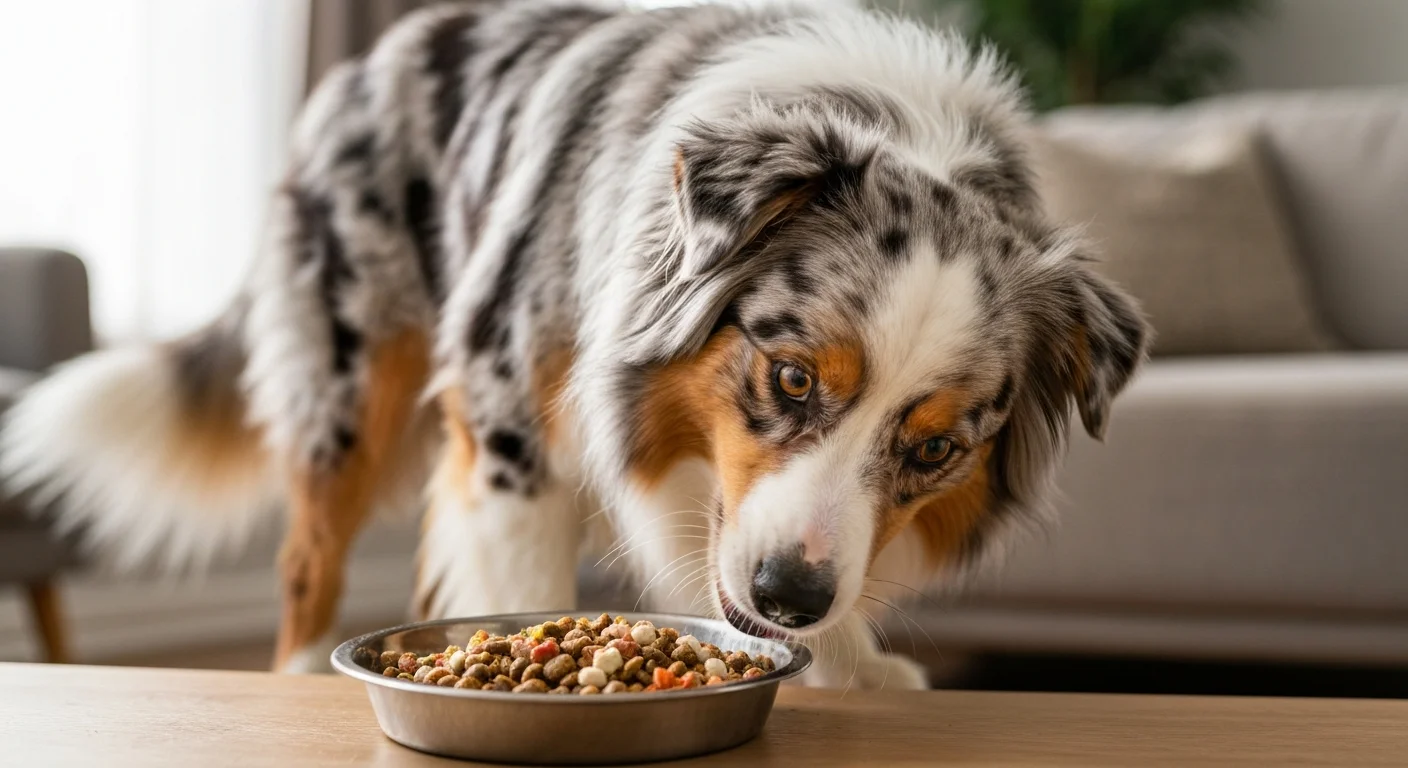
Nutritional Needs of Breeding Merle Dogs
The nutritional requirements of merle breeding dogs are not fundamentally different from those of any working or breeding canid — but the demands of a breeding programme make good nutrition essential. Bitches in whelp and lactation have dramatically increased caloric and micronutrient needs, and a dam in poor condition before whelping will be even more depleted by the time her litter is weaned.
Key nutritional considerations for merle breeding bitches:
- Pre-breeding condition: Bitches should be in lean but not thin condition before breeding. A body condition score of 4-5 on a 9-point scale is ideal. Overweight bitches face higher whelping complication rates; underweight bitches have reduced milk production.
- Folic acid: Supplementation with folic acid in the weeks before and after conception is associated with reduced neural tube defect rates in multiple species. While specific merle data is limited, the general principle of pre-conceptional folate support applies.
- Protein quality during lactation: Lactating bitches may require up to three times their maintenance caloric intake. High-quality animal protein must form the basis of this diet to support milk protein synthesis.
- Calcium balance: Eclampsia (milk fever) is a genuine risk in heavily lactating bitches, particularly in smaller breeds. Calcium supplementation during pregnancy is contraindicated as it suppresses the dog's own calcium regulation — but veterinary monitoring of calcium levels in the post-whelping period is prudent for bitches with large litters.
Feeding Merle Puppies During Development
From the introduction of solid food at three to four weeks, merle puppies should receive a nutritionally complete puppy diet appropriate for their breed size. The importance of this becomes particularly acute for puppies with any degree of merle-associated sensory impairment.
Puppies with reduced hearing may rely more heavily on visual and olfactory cues to locate food and navigate their environment. Puppies with visual impairment depend more on smell and sound. Ensuring that the weaning environment supports these adaptations — consistent bowl placement, consistent feeding routine, careful monitoring of individual intake — is part of the breeder's duty of care for any puppy with sensory challenges.
Unilaterally deaf puppies — those deaf in one ear only — may not be immediately identifiable through behavioural observation. These puppies pass standard clicker and noise-response tests because their functioning ear compensates. Only BAER testing reliably identifies unilateral deafness. Buyers of merle puppies should be made aware that unilateral deafness, while not severely limiting, does affect directional hearing and should inform training approaches. See our complete guide to merle deafness and BAER testing.
Sun Sensitivity and Skin Care
The areas of reduced pigmentation associated with the merle pattern — particularly pink or pale skin around the nose, eyes, and ears — can be more sensitive to UV radiation than fully pigmented areas. While the clinical significance of this in most pet dogs is modest, breeding stock and dogs with extensive white markings should be managed with some UV awareness:
- Avoid extended sun exposure during peak UV hours, particularly for dogs with depigmented eyelid margins
- Monitor for solar keratosis or other UV-related skin changes in ageing dogs with significant white patches
- Dogs with pink eyelid margins warrant closer ophthalmological monitoring as they age
Eye Health Monitoring Throughout Life
Even merle dogs who pass their initial ophthalmological examination as puppies benefit from annual or biennial eye examinations throughout their life. Some merle-associated eye conditions are progressive rather than static, and early identification of developing pathology allows for earlier intervention and better management outcomes.
Breeding stock should have current eye test certificates obtained within 12 months of any planned mating. The rationale for ongoing eye monitoring in merle dogs is explained in our guide to merle eye anomaly vision screening, which covers both congenital and late-onset conditions associated with the merle pattern.
Exercise and Mental Stimulation for Sensory-Impaired Merle Dogs
Merle dogs with hearing or visual impairment — whether partial or complete — can live full and happy lives with appropriate management. The key adjustments required relate to safety, communication, and mental enrichment rather than severe restriction of activity.
For deaf dogs, the critical safety consideration is that they cannot be trusted off-lead in unfenced areas. Visual communication through hand signals, vibration-based recall tools, and consistent routines replaces the vocal communication that hearing dogs rely on. The learning capacity of deaf dogs is equivalent to that of hearing dogs — they require the same level of mental stimulation and benefit from the same variety of enrichment activities.
For dogs with significant visual impairment, consistency of environment is paramount. Dogs with reduced vision develop detailed cognitive maps of their home environment and can navigate familiar spaces confidently. Moving furniture or introducing new obstacles without allowing the dog to explore them can cause unnecessary disorientation. Scent-based enrichment activities are particularly valuable as a primary mental stimulation channel for visually impaired dogs.

Veterinary Team Selection for Merle Breeding Dogs
Merle breeders benefit enormously from building a relationship with a veterinary practice that has specific experience with herding breeds and is familiar with merle genetics. A practice that understands the condition landscape — including the ocular and auditory risks documented on this site — will be better equipped to provide relevant preventive care advice and to identify early signs of merle-associated pathology.
Responsible merle breeding is a long-term commitment to the health and wellbeing of every dog produced. This commitment extends beyond genetics and testing into the ongoing care of breeding stock, the monitoring of placed puppies, and the support of buyers who are managing any health challenges that emerge. The foundation for all of this is laid by following the protocols of responsible merle breeding from the very beginning.
Dr. Patricia Wells
Canine Coat Genetics Specialist
Veterinary geneticist with over 25 years researching coat colour inheritance in domestic canids. Former research fellow at the Animal Health Trust and consultant to multiple breed health programmes across Europe and North America.
View all articles