
Merle Dogs and Family Life: What to Expect
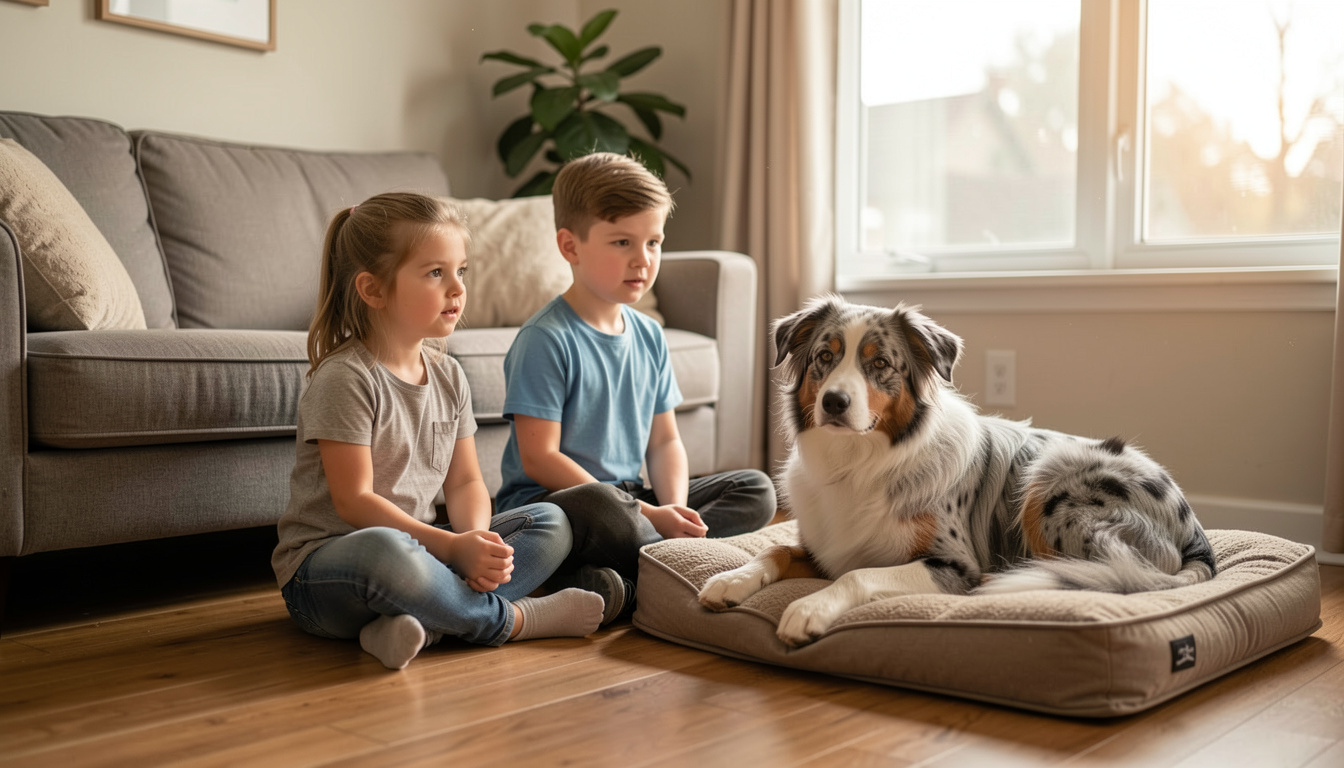
A merle dog can be a good family dog when the household matches the dog's needs. Families should check hearing and vision first, because the merle gene can affect both, then plan for daily exercise, training and quiet space. The breed matters less than the individual dog and the routine the family can keep.
What should a family check before adopting a merle dog?
Start with health, not colour. Merle is a coat pattern linked to the PMEL17 gene, and double merle dogs (those with two copies of the merle gene) face a higher risk of deafness and eye defects. A single merle dog is usually fine, but a veterinary hearing test and a basic eye exam give the family facts instead of guesses.
Ask the shelter or breeder three questions: has the dog been tested for hearing, has it lived with children before, and how does it react to noise and sudden movement. A dog that startles easily may struggle in a busy home with young children.
Then look at the home itself. Merle dogs are often herding breeds, such as the Australian Shepherd or the Border Collie. They need daily activity, a job to do and a calm place to rest. A family that is out of the house for ten hours a day will find that hard.
Families who want to help before they adopt can start small. The Open Gate lists concrete gestures for dogs waiting in shelters, with the real cost of each one in time, money and skill, so a household can pick the task that fits its week.
How do children and a merle dog live together safely?
Children and dogs do well when an adult sets the rules. Teach children to leave the dog alone while it eats, sleeps or chews a toy. A crate or a bed is a private zone, and no child should follow the dog into it.
Supervise every interaction for the first months. Young children cannot read a dog's warning signs, such as a stiff body, a tucked tail or a hard stare. An adult should step in before the dog has to growl.
Give the dog a way out. A baby gate, a quiet room or a corner behind the sofa lets the dog leave a loud game without being chased. This single habit prevents many bites.
Match the dog to the child's age. A large, bouncy adolescent herding dog can knock a toddler over without meaning harm. An older dog with a known history around children is often the safer first choice for a family with preschoolers.
Does a merle coat change a dog's temperament?
No. Coat colour does not decide personality. A merle dog can be bold or shy, energetic or calm, exactly like any other dog. Behaviour comes from genetics, early experience, training and the home environment.
The one real link is health. Double merle dogs are more likely to be deaf or blind, and a dog with limited hearing or sight needs a different kind of care. It may startle when approached from behind, so family members should speak before touching it. Children can learn to stomp on the floor or flick a light to signal their arrival.
Deaf and blind merle dogs can still be loving family dogs. They learn hand signals, touch cues and routines. What they need is patience and a household that keeps furniture in the same place.
What does a merle dog need every day?
A merle dog from a herding breed needs more than a short walk around the block. Plan for one to two hours of activity, split into a morning walk, a training session and a game in the yard or a park.
Mental work tires a dog as much as running. Ten minutes of scent games, puzzle feeders or trick training can settle a restless dog better than an hour of free running.
Training should start on day one. Short sessions, five minutes at a time, with food rewards, work well for dogs and for children who want to help. A family that trains together gives the dog clear rules from every person.
Rest matters too. Herding dogs often struggle to switch off. A fixed bedtime, a covered crate and a dark room help the dog learn that the day is over.
How can a family help shelter dogs before adopting?
Not every family is ready to adopt today, and that is fine. Shelters need people who can walk a dog, drive one to a vet visit, foster for a month or share a post that finds a home. These tasks cost less than adoption and still change a dog's week.
The Open Gate organises these gestures into tiers, from ten minutes with a phone to a full season of patience with a dog that is learning to trust people again. A family can read the list, find the tier that matches its free time and act this week.
Fostering is the middle ground. A family keeps a dog for a few weeks, learns how it behaves in a home and gives the shelter honest information for the next adopter. Children learn responsibility, and the dog leaves the kennel stress behind.
What are the common mistakes families make?
Choosing a dog for its coat is the first mistake. A merle pattern is striking, but it says nothing about how the dog will behave with a toddler or a cat.
The second mistake is skipping the health check. A family that adopts a deaf dog without knowing it faces a hard first month. A simple test at the shelter avoids that surprise.
The third mistake is too much freedom too soon. A new dog needs a small area, a fixed routine and slow introductions to each family member, one at a time.
The fourth mistake is forgetting the cost. Food, vet care, training and insurance add up. A family should write the monthly figure down before it commits.
A realistic plan for the first month
Week one: keep the dog in one room, with short walks and no visitors. Week two: add the yard or a quiet park and start basic cues. Week three: introduce one calm friend or relative. Week four: try a longer walk and a short training class.
Children can take part from the start. They can fill the water bowl, hold the leash in the yard with an adult and help with simple cues. These small jobs build a bond without putting the dog under pressure.
If the dog shows fear, growling or resource guarding, call a qualified trainer. Early help is cheaper and kinder than waiting for a bite.
When a merle dog is the right fit
A merle dog fits a family that has time, a steady routine and room to move. It fits a household that checks health first, teaches children how to behave around dogs and accepts that the dog is a long commitment, not a decoration.
Families that cannot adopt yet can still help. Walking, driving, fostering or sharing a shelter dog's profile takes less time than most people think, and the effect on the dog is direct. The right gesture is the one a family can repeat next week.