
Merle Genetics in the Australian Shepherd: Colour, Risk, and Responsible Breeding
The Australian Shepherd is perhaps the breed most closely associated with the merle pattern in the public imagination. Blue merles and red merles are among the four AKC-recognised colour patterns for the breed, and the pattern has been a defining feature of Aussie type for over a century. This long history makes the Australian Shepherd an ideal case study for understanding both the beauty and the complexity of merle genetics in practice.
This guide examines merle specifically in the context of Australian Shepherd breeding: the colour interactions possible in the breed, the prevalence and types of merle in typical breeding populations, and the breed-specific considerations that apply when planning safe pairings. It builds on the foundational genetics covered in our guide to the merle gene and our comprehensive review of merle and coat colour interactions.
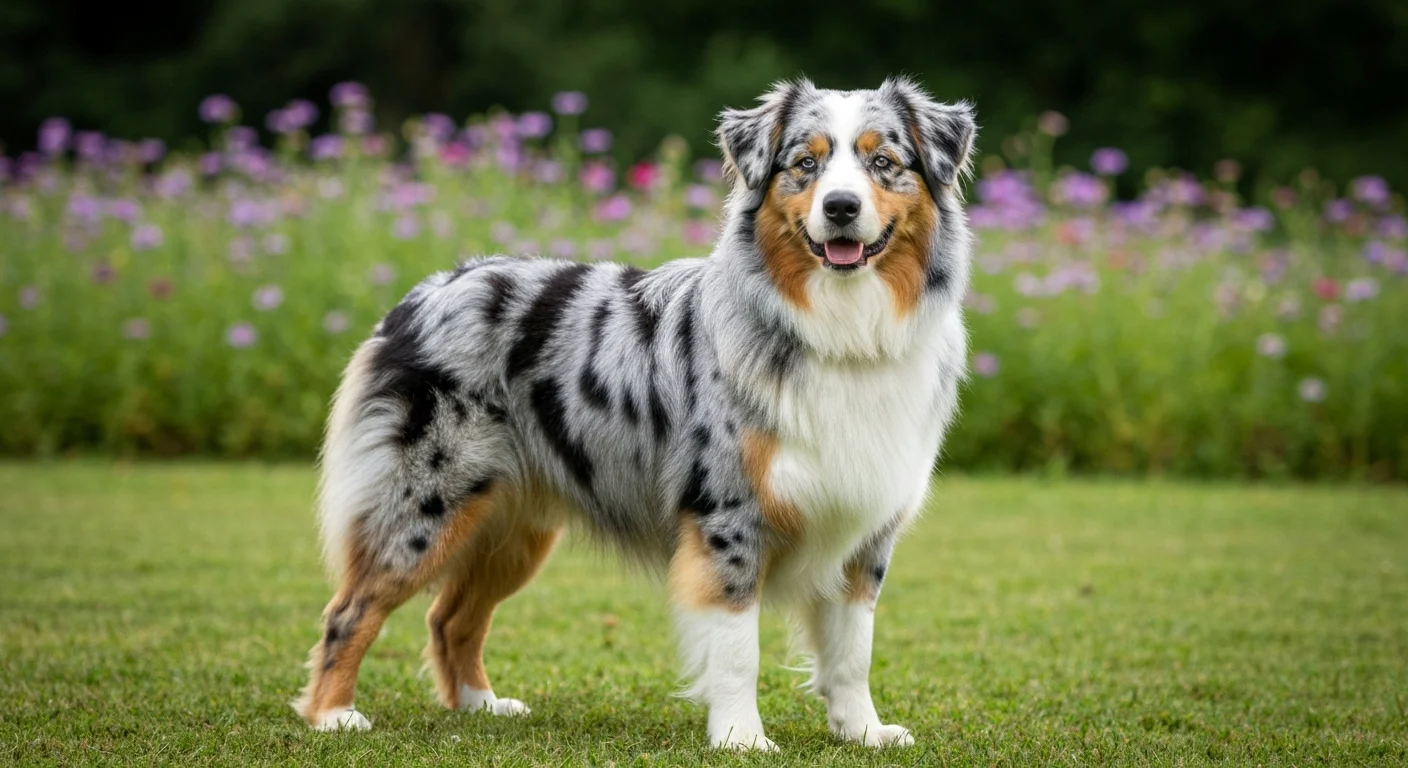
The Four Recognised Australian Shepherd Colours
The Australian Shepherd breed standard recognises four colour patterns: black, blue merle, red (liver), and red merle. White and tan point markings may appear in all four. This means that merle appears in two of the four accepted colour designations — an unusually high proportion that reflects the historical breeding practices and the aesthetic preferences of early Aussie breeders.
The two merle versions represent the same merle allele expressed on different base coat colours. Blue merle results from the merle gene acting on a black base coat, creating the characteristic grey-blue with black patches. Red merle results from the merle gene acting on a red (liver, bb) base coat, producing warm tan and brick red patches on a lighter ground colour.
The Tan Point Complication
Many Australian Shepherds carry tan point markings in addition to their base colour and merle status. A blue merle with tan points is often described as a blue merle tri. A red merle with tan points is a red merle tri. These are straightforwardly handled in breeding terms — the tan point gene is separate from merle and does not interact with merle expression or safety.
The complication arises with heavily sabled individuals. Sable, in which black-tipped hairs overlay a tan base, can partially or completely mask merle patterning in some Australian Shepherds. A sable dog who is also merle may show very little visible merle pattern — creating a cryptic or phantom merle presentation. This phenomenon is documented in detail in our guide to phantom merle and sable. In Australian Shepherds, where sable is present in the gene pool, visual assessment of merle status is unreliable, and laboratory testing is essential.
Prevalence of Cryptic Merle in Aussie Populations
Population studies of Australian Shepherd genetics have identified cryptic merle alleles at a frequency that is not negligible. These shorter alleles — producing minimal or no visible coat effect — circulate in lines that visually appear free of merle. When breeders of nominally non-merle Aussie lines breed two dogs together who each carry cryptic alleles, the probability of producing visible merle or even double merle puppies is real.
This is precisely why mandatory testing of all breeding stock applies — not just the obvious merles. The cryptic merle guide explains the mechanism by which these shorter alleles can produce full merle or double merle offspring in subsequent generations. For Australian Shepherd breeders working in any colour, testing both parents before any breeding is the minimum standard.
One of the most common sources of unintentional merle production in the Australian Shepherd is the pairing of two visually black dogs, one or both of whom carry undetected cryptic merle alleles. The resulting litter may include visible merles — or, in the worst case, double merles — without either parent appearing merle to the eye. Only DNA testing resolves this ambiguity.
White in Australian Shepherds: Breed Standard and Safety
The Australian Shepherd breed standard specifies that white should not appear around the ears or above the eyes, and should not extend above the elbow on the forelegs or above the hock on the hind legs. These white limits are not merely aesthetic — they reflect the historical understanding of a correlation between excessive head white and sensory development issues in the breed.
Puppies with white markings that exceed the breed standard limits — particularly white that covers or surrounds the ears and eyes — warrant careful health assessment. BAER testing and ophthalmological screening should be prioritised for these individuals. The mechanisms connecting white patterning and sensory development are explained in our comprehensive guide to health issues in double merle dogs.
Registration and Merle-to-Merle Breeding Policies
The Australian Shepherd Club of America (ASCA) and the AKC both permit registration of merle Australian Shepherds. Neither organisation currently prohibits merle-to-merle breeding at the registration level, although breed health committees have consistently advised against it. Some affiliated breed clubs in other countries are more restrictive.
The absence of a formal prohibition does not make merle-to-merle breeding acceptable. As discussed in our guide to merle breeding legislation and kennel club policies, regulatory frameworks lag behind scientific understanding in many areas. The responsibility to breed responsibly rests with the individual breeder, regardless of what registration bodies permit.
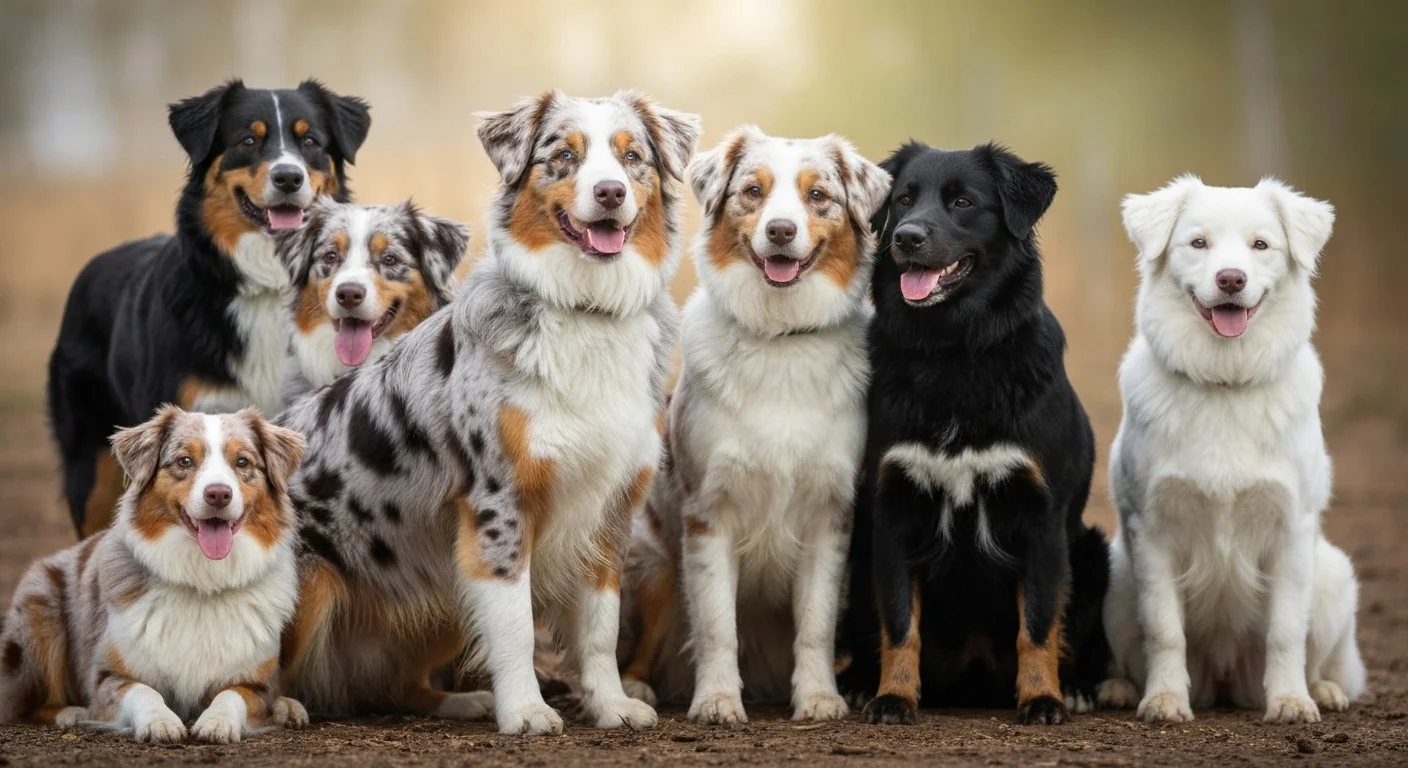
The Mini Aussie and ASDR Question
The Miniature American Shepherd (formerly Miniature Australian Shepherd) carries merle at the same allele as the full-size Australian Shepherd and faces identical breeding safety considerations. Dogs registered through the American Stock Dog Registry (ASDR) or other alternative registries are subject to the same genetic rules — merle is merle at the molecular level regardless of which registry documents the dog.
The proliferation of registries in the Mini Aussie world has created confusion about health standards. Breeders working in these smaller registries should apply identical testing standards to those described throughout this site. A smaller breed size does not reduce the risk of double merle production.
Australian Shepherd Merle Breeding: Summary Principles
For Australian Shepherd breeders, the following principles summarise safe merle breeding practice:
- Test every breeding dog for merle allele length, regardless of coat colour or apparent merle absence
- Never breed two dogs where either carries any merle allele unless the partner is confirmed m/m
- Apply sable-specific awareness — sable masks merle pattern, making visual assessment unreliable
- Monitor white markings at birth and prioritise BAER and ophthalmological testing for puppies with extensive white
- Maintain detailed records across generations, as documented in our breeding record keeping guide
The Australian Shepherd's merle pattern is one of its most distinctive and beloved features. Producing blue and red merles safely — through tested pairings, comprehensive screening, and transparent placement — is not only possible but is what every serious Aussie breeder should aspire to. The pattern does not require compromise on welfare to produce.
Dr. Patricia Wells
Canine Coat Genetics Specialist
Veterinary geneticist with over 25 years researching coat colour inheritance in domestic canids. Former research fellow at the Animal Health Trust and consultant to multiple breed health programmes across Europe and North America.
View all articles