
Social Media and the Merle Demand Problem: How Viral Beauty Creates Real Suffering
The merle pattern is photogenic. The dappled, fractured colour across a dog's coat photographs beautifully in the kind of bright, high-contrast lighting that dominates Instagram and TikTok. In the past decade, this photogenic quality has driven an explosion of demand for merle dogs — including in breeds where the pattern has no historical presence — and this demand is directly connected to a surge in preventable double merle puppies.
This article examines the relationship between social media visibility and irresponsible merle breeding. It is intended both as analysis for those trying to understand why the problem has grown, and as practical information for people who encounter merle dogs on social platforms and want to make ethical choices. The broader ethical context is explored in our guide to ethical considerations in merle breeding.

How Social Media Inflates Demand for Extreme Merle
Social media algorithms favour visually striking content. A standard tricolour Border Collie receives modest engagement. A heavily merled Border Collie with striking blue eyes receives thousands of shares. A so-called "double merle" dog — white or near-white with light eyes — may be presented as a rare and desirable aesthetic. The algorithm rewards the extreme.
This creates a perverse incentive for breeders who prioritise social media popularity over welfare. Producing the most visually extreme merle dogs — dogs with maximum depigmentation, white coats, unusual eye patterns — generates followers, attention, and premium pricing. The fact that these dogs are frequently deaf, visually impaired, or both is either not disclosed or is reframed as a charming quirk ("it's just a deaf white dog, he's fine").
The suffering is real. The health consequences of double merle production are documented extensively in our guide to health issues in double merle dogs. None of these outcomes are "fine" — they are preventable injuries inflicted on animals for aesthetic production.
The "Merle French Bulldog" Problem
Perhaps no single development better illustrates the social media merle problem than the rise of the merle French Bulldog. French Bulldogs have no historical merle genetics — the pattern was introduced through crossbreeding, specifically to produce novelty for social media and premium pricing.
The consequences are severe on two levels. First, as with all breeds where merle is not historically established, the introduction of the gene in a population without testing culture means breeders are routinely producing merle-to-merle pairings with no awareness of the risks. Second, French Bulldogs already carry significant health burdens — brachycephalic obstructive airway syndrome, spinal issues, reproductive difficulties — that are now being compounded by merle-associated health problems in dogs who were produced to look good on a phone screen.
This phenomenon is documented in depth in our guide to merle in non-traditional breeds. The French Bulldog is the most prominent example, but similar patterns have emerged with Poodles, Chihuahuas, and Dachshunds.
Merle puppies sold at premium prices because of their social media appeal are frequently the product of irresponsible breeding. A high price tag does not guarantee genetic testing, health screening, or welfare standards. The questions in our puppy buyer's guide apply regardless of how much a puppy costs.
The Role of Influencer Culture in Demand Creation
Dog influencers — social media accounts built around a photogenic dog's daily life — have significant reach. When an influencer's merle dog is featured in daily posts, followers associate the pattern with desirability. Many will search specifically for breeders who produce similar-looking dogs.
Influencers themselves are not necessarily culpable — they may have acquired their dog responsibly and have no knowledge of the genetics-welfare connection. But the demand they create cascades into the unregulated portions of the breeding market where supply follows profit rather than principle.
Some influencers with merle dogs have chosen to actively use their platform to promote genetic testing and responsible breeding. This is the more powerful intervention — reaching the same audience with welfare information, not just aesthetic aspiration.
How Buyers Can Resist the Social Media Trap
The most effective action prospective dog buyers can take is to educate themselves before searching for a puppy. A buyer who understands merle genetics will not be fooled by a seller who presents obvious double merle features as desirable. They will ask for laboratory testing documentation. They will be suspicious of premium pricing justified purely by coat appearance rather than health testing.
Specific questions to ask any merle breeder are covered in our puppy buyer's guide. The key principle is this: if a breeder's primary selling point is the dog's visual appeal rather than the thoroughness of its health testing, this is a warning sign.
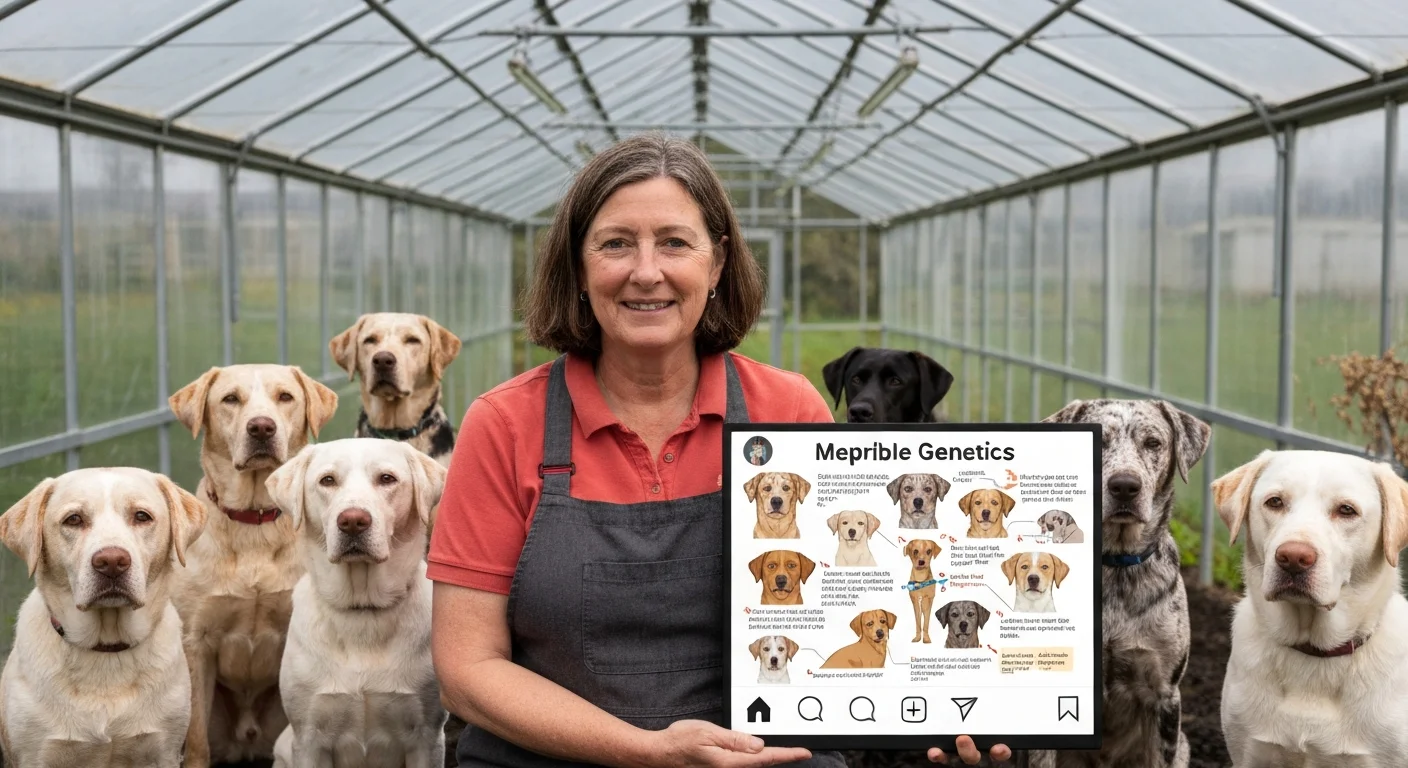
Platform Responsibility
Social media platforms have been slow to develop policies around the promotion of animals bred with predictably harmful genetics. Accounts that celebrate double merle production as desirable, that market obvious double merle puppies at premium prices, or that normalise merle-to-merle breeding are operating without consequence on major platforms.
Several animal welfare organisations have campaigned for platform-level interventions, including requirements that puppy sales posts include health testing documentation. Progress has been modest but not zero — the promotion of puppy farming has attracted more scrutiny in recent years, and merle-specific welfare concerns are increasingly being included in these conversations.
What Responsible Merle Breeders Should Do Online
Responsible merle breeders who are active on social media have an opportunity to shift the culture from within. Sharing testing results alongside puppy photographs, explaining the merle safety principle in accessible terms, and being willing to discuss the genetics openly creates a counter-narrative to the premium-price-for-striking-appearance model.
This is not about lecturing — it is about demonstrating that beautiful merle dogs are produced through knowledge and care, not through gambling with genetics. A breeder who posts their laboratory test results alongside their stunning blue merle litter is making a powerful argument for the standard that all merle breeders should meet.
The social media merle problem is ultimately a demand problem. Buyers who understand what double merle means stop being willing to pay premiums for visually extreme dogs. Followers who see genetic testing as the norm begin to ask why a particular breeder has not provided it. The same platforms that amplify irresponsible breeding can be used to raise the standard — when enough people in the community insist on it. The foundation of this change is the kind of scientific literacy described throughout our guides to responsible merle breeding.
Dr. Patricia Wells
Canine Coat Genetics Specialist
Veterinary geneticist with over 25 years researching coat colour inheritance in domestic canids. Former research fellow at the Animal Health Trust and consultant to multiple breed health programmes across Europe and North America.
View all articles